Put my pen to the page… I don’t often get the time… Builds such guilt inside… But I know you remain mine… And I know it hurts you too… Everyday… But there’s nothing we can do.
I’m so lonely here… Been so long since I’ve seen your face…Time keeps marching on… Seems no end to this place… But if I close my eyes… I can see you clearly… And dream you’re near me.
Instrumental……………………………….Short lead Lead……………………
Verse 3
Morning comes… I could swear I feel you next to me… But as I shake off the sleep… It’s clear to see… I am all alone… Same as so many days in a row… No… This is not home…
Hook
Rub the sleep from my… tired eyes… My face is set but my heart cries…
My thoughts try to hold me but I push them away…
Watch the sunrise in this place… Struggle with the words I want to say…
Instrumental……………………………….Short lead Lead……………………
Verse 4
I don’t miss you anymore… It’s just a never ending need… I can hold back my tears… But my heart will bleed…Gets the best of me… I confess… Sometimes there is no best.
Instrumental………………………………. Long Lead……………………
Bridge
I hear life calling, but it’s so far away… Feels I am walking on the edge of a blade… And the day’s moving on… Morning’s nearly gone…
Instrumental……………………………….Lead wind down to last verse ……………………
Verse 5
I’ll say goodbye… You know my heart is always with you… You know I love you… Those are the only words I know are true…You are always with me… I’m coming home… I just don’t know when that might be…
Hook
I push the tears from my eyes… I set my face but my heart still cries…
My thoughts try to hold me but I… push them away…
Watch the sunrise… in this place… Start my day…
Watch the sunrise… in this place… Start my day…
(Slows to single acoustic stops at home)
Send this letter home to you… Send this letter home…
Happy Sunday. It has been a long weekend for me. I suppose that like everyone else I try to cram too many things into the weekend. I always end up with undone items on my weekend list.
Yesterday I ran into an arguer. Some people will listen to what you say, or expect you to listen, and then you can agree to disagree or maybe even enlighten each other and learn something that changes your mind. Arguers on the other hand are never wrong so there is no need at all to back up on what they have said, or apologize, or change their mind or anything other than point out that you are absolutely wrong and then proceed to argue you into submission. Couple that with religious extremism and you have got a formidable opponent. Now not only are they right but the Holy Ghost, Jesus and God himself say so. I know that because I have had them tell me, like the arguer the other day, that the Holy Ghost gives them the words to say. Talks to them. My friend said, Hmm, usually when you have voices in your head it means that you have an illness, usually a mental illness. I agreed.
I would love to go further with this line of thought, but I wont. I will say be who you really are and don’t let people push you around. And don’t waste your time with arguers. You just have to accept the fact that they are not interested in solving the problem, or compromise, they are only concerned with winning. It’s a ME ME ME thing, and so it really has nothing at all to do with you.
I have about a week or two before I am back into full time writing. I have already got the notebooks out and the storyline working. Now that Earth’s Survivors and The Zombie Plagues are splitting there is a lot to write. I have it worked out in my head and that is my start. The rest comes when I sit down and begin to write it in a few weeks. I am really looking forward to it.
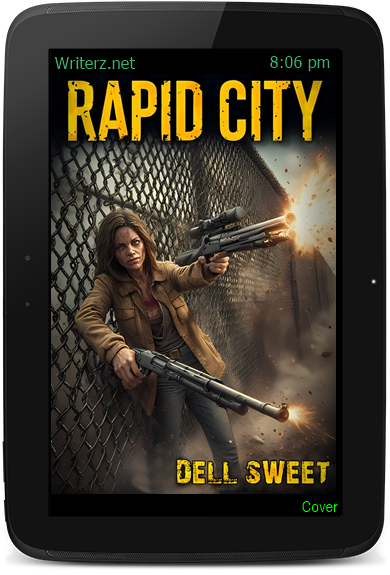
I am going to leave you with a free story from the Rapid City stories. This is Two. These are short stories but I have a longer book stuck in my head that I will write someday, and as the Earth’s Survivors and The Zombie Plagues books progress, Rapid City will play a larger and larger part. So one way or the other the story will be written…
This ebook is licensed for your personal enjoyment only. This ebook may not be re-sold or given away to other people. If you would like to share this book with another person, please purchase an additional copy for each recipient. If you’re reading this book and did not purchase it, or it was not purchased for your use only, then please return to Amazon.com and purchase your own copy. Thank you for respecting the hard work of this author.
This is a work of fiction. Any names, characters, places or incidents depicted are products of the authors imagination. Any resemblance to actual living persons places, situations or events is purely coincidental.
A short foreword. I did not realize when I wrote the original story that there would be interest in it as any more than a good, short read. But, like many of the readers out there, I got caught up in the life of Robert Evans… What was it like? Traveling from town to town? Selling your skill to the highest bidder. I found myself so curious that I sat down to write it out and find out. At the very least this will be a long series of short stories, but it may just turn into a novel with the short stories as a prelude to The true story of Robert Evans life….
Wendell Sweet 01 – 2013
The novel based on this short story is available at Amazon.
Rapid City
The newfound resources provided a small measure of comfort, but the shadow of suspicion and mistrust lingered, a constant threat to their already precarious existence. They had survived the attack, but the war within Rapid City had only just begun, a war fought not with guns and blades, but with suspicion, betrayal, and the relentless erosion of trust. #Dystopian #Apocalyptic #Zombie #KU #Audio #Readers #Listeners #DellSweet
They had come from north of the border. Two men and two women, and they picked up others as they came. They were twenty when they came to the river where it had cut into the floor of the desert and spread out nearly a mile wide.
Near the spot they had decided to build there was a set of rapids that stretched for nearly a mile. So they had named the city Rapid City, half joking, but it had stuck as they had worked to build the city. And city was a kind name. Rapid city, six months later, had been no more than a collection of ten wood sided structures, and the river had moved more than a mile away. Wetlands had formed where the river had been, and they seemed to be slowly turning to swampland.
Ten had died over the last few weeks. The fight, and that was what it was, was taking a toll on them.
On this day, the sun hung straight up in the sky. Dust coated the buildings, the odor from the swamp seemed to hang over the little town like a veil. Gary sat on the front porch of the church and looked out at the little town. His wooden chair leaned back into the wall, feet on the railing. And in the daylight it seemed unreasonable that there could be any such thing as the Un-Dead. It seemed, in fact, completely impossible.
The first few deaths they had not been prepared for. The first had been Gary’s friend Daniel. They had buried him in a small cemetery they had built a mile from the town to bury a few wanderers who had found the town in a half dead state and not lasted long after they did manage to find it. Daniel was the first of their own they had found a need to bury.
They had buried him in the early morning after finding him dead in his bed. It had been a horrific scene. They had thought quite possibly it had been wolves. The windows were open to let in the summer breezes. The wolves, they had seen them out by the swamp, could have easily come through the window. Daniel had been savaged. His throat ripped open. They had buried him in early morning and by that evening twenty six wolves had been dragged back into town. If there were any left they had hidden themselves well.
Then evening had come and the whole world had changed. It was not far into the night when the noises had begun out at the cemetery.
In the desert noises carry a long way. They had been unsure of what the noises meant at first. What they had decided was that there should have been no noise at all out there in the darkness. Six of them had taken their rifles and gone out into the darkness, following the noise to it’s source.
When they had arrived at the cemetery the grave had been opened. But, not just opened. Dug up, and dug up from the inside outward. There was no way they could deny it, although they did until a few nights later when Daniel himself had come back.
It had been deep into the night. Deep. Gary, Mitch and Sam and Freddy had had the watches. The watches, at first, had been to watch for the never ending gangs of murderers and thieves that seemed to be flooding out of the north. The watches by that night, had consisted of nothing more than hanging around in the church building, which was their newest and best built building, and maintaining a presence in the town just in case someone happened into the town in the middle of the night. No one ever had in the last few months.
There was no denial after that night. Daniel had come from the shadows, stinking of the grave, and made a grab for one of the rotting corpses of the wolves that they had meant to drag back out to the swamp earlier in the day but hadn’t gotten to. Gary had seen him clearly. He had turned to the others but it was one of those things where everyone had just happened to be looking in the right direction at the right time. No one had missed it. No one had only partially caught it. When he had turned to them they had been turning to one another. The only that didn’t happen was nobody thought to go for a weapon until a few minuets later. And, even then, they were not sure exactly what they were doing.
They had not caught him that night, but they had caught him the next night when he had killed and was eating Barry Evers in the storage shed behind John Sampsons place. That had been a bad deal, Gary thought now.
Gary had shot him twice. Nothing. He had not even stopped trying to eat Barry’s face. Mitch had stepped up and blew his head off.
Rapid City had no doctor. W had had a veterinarian at the first but he had run off with Freddy’s wife and that was the last we’d seen of him. Together, Gary and the others had looked over the body. And, body it was, and had been for several days. Daniel had died and had somehow not died at the same time. That was the first time Gary and the others had talked about Zombies. Some of the travelers through Rapid city had talked about them, it was the hottest topic, usually. It was supposed that the north was infected with them. But They had never seen one, and they had never discussed them until that night.
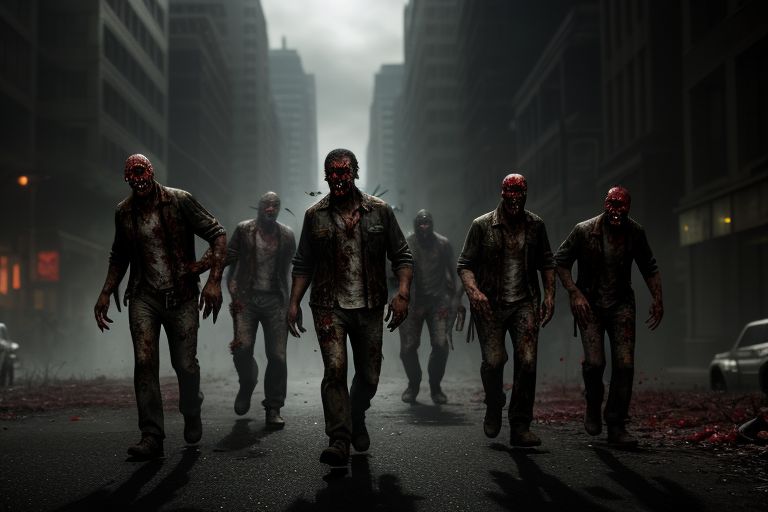
As it turned out the Zombies were infesting the swamp. They had buried Daniel for the second time only to find Freddy dead the next morning. His throat ripped open the same way Daniels had been And Mitch had argued for taking his head off. It was the right, the smart thing to do. To make sure he didn’t come back. But they had not. They had not wanted to sink to that level of barbaric depravity. Sam had argued against it and it had not been a hard thing to get behind. But that night when the noise had started they had grabbed their weapons and made for the cemetery
They had found him nearly free of the grave. And there had been more. Six other Un-Dead had been standing close to the grave. Waiting for him.
Before the killing was over they had gotten two of those waiting and Freddy. They had dumped all three into the grave. Mitch had taken a round pointed shovel and severed their heads. It had taken forever and had been about the most gruesome thing Gary had ever seen. But he had been unable to take his eyes off the scene.
Gary tipped his chair forward and stood from the chair as the legs came down on the wooden decking. A rider was approaching on the main street. Gary loosened his pistol from his holster. It was one of those nylon webbed ones. They were all wearing one kind or another now. This was surely not a Zombie but they were down to ten. They were vulnerable on many fronts now. Not just from the undead, but from the living too who seemed to have no problem killing each other for next to no reason at all. A dog. A vehicle. A horse, and horses were becoming major items, but mostly women. Women were the keys. Men could not procreate, women could. True, they could do it with any man. But a man could not do it without a woman at all. Gary had seen many men killed over a woman.
“Right there will do,” Gary told the man in a clear strong voice.
The man stopped the horse in the street but stayed on his mount looking across the short stretch to Gary where he stood on the porch. They were down to ten now. Two men and eight women. It was like the Zombies only wanted the men. Or maybe wanted the men out of the picture.
“Heard this was a peaceable town,” The man said.
“Was… Ain’t now… Now it’s a plague town… You best ride on,” Gary told him.
“I ain’t heard of no plague,” The man said. His eyes were like diamonds looking out from under the brim of his hat. He wore no gun, but a wire stock machine pistol protruded from a scabbard off the saddle.
“You heard of this plague… They call it the plague of the dead… The Un-Dead… Zombies. Call it what you will, you heard of it or you ain’t real… And I can tel you they are real and we got them right here… You don;t even want to think about spending no time here at all.. We been losing a man a night lately…” Gary shifted, rocked on his heels to take the tingling out of his legs. He had sat in the chair too long. His left leg was nothing but pins and needles. He kept his eyes on the man who shifted in his saddle slightly.
“Ain’t real,” He said.
“Uh huh… Got a little cemetery outside a town… Rode right by it.”
“Uh huh… Saw it,” The man agreed.
“Up until a few weeks ago that cemetery was empty. Go tell those dead men Zombies ain’t real.” He stepped forward and spit over the rail into the dust.
Silence held. The dust seemed to settle more fully onto the town. At last the man spoke.
“Any way I’d like a drink… Wouldn’t deny a man a drink, would you,” he asked?
“No I would not. And I will tell you what you do. Point that horse due East out of town. You’ll hit the river and fresh water about a mile out… Ain’t been no fresh water here in months. Drink your fill.”
His eyes seemed to blaze from the brim of his hat. “I believe I’ll remember you, Friend.”
“Good. You do that. Then remember I saved your stupid ass by sending you on your way… Ain’t no way to fight these bastards…” He spit over the rail once more. “We expect to be dead inside of a week… Got about seven hours until full dark. That will put you up in the hills… Ain’t heard of trouble from the Un-Dead up there.”
The stand off lasted a few more minuets in the hot sun and then the man turned his horse and rode away without another word.
Donita waited in the shadows of a building starring at the lights in the church building. They were forty now. Strong. And she was their undisputed leader.
She had undergone many changes on the journey across the wastelands of the west. Her body had finished it’s changes. Her mind had come back to her. And her authority had come more fully to her.
They were forty bot they could have been seventy. She would not stand those who showed the least bit of defiance. With her there was no second chance. There could not be. If defiance was in them it would only grow. If they grew they would become strong. If they became strong she would not be able to control them. If she could not control them they could control her, and she could not abide that. She ruled and bowed down to no one at all.
She took them as babies. When they were lost in the pain and confusion of transition. She killed them. Took their heads and let them continue their journey to the dead. It served a reminder to those with her, but she was not sure it mattered after a time. She had so many that were loyal to her that none could get close to her. And chief among them was the big man she had taken up north, Jeff.
The passage into death took some of what you were. You did not come through it the same. The skin pulled taught upon your bones. The fat stores were gone, and you were reduced to the basics. Not so with the big man. He had come through virtually unchanged. That and the strength that naturally came to them made him the strongest in the group. He was easily stronger than and three of her others; any five breathers. He stood beside her now. Waiting on her orders.
The moon was new in the sky. Still competing with the setting sun. They had set out from the swamp just past twilight. She hoped the breathers were thinking that there was no need to worry until later in the evening when full dark came.
She watched a few seconds longer. They were at their evening meal. They took them together now. Hoping for security in the numbers. Shadows moved on the curtains as she watched. They would be the most vulnerable now, and it was time to end this fight with them. The night before they had killed one of the twins. One of her twins, and they had to pay for that.
She hesitated the briefest of seconds longer, then, as a group, they took the building and the feasting lasted into the early morning hours.
I watched the sunrise on the wall across from me. I could’ve turned but my heart wasn’t in it.
The walls were plywood, scarred, gouged and in need of a coat of paint. But there would be no paint, of that I was sure. Even if it could be found no one would be bothered to take the time to put it on.
The pain was running around in me like a live thing. A ferret gnawing its way out of a burlap sack. It was the biggest thing in my life right now, overshadowing the why and how of me seeing this sunrise and hopefully a few more.
The sun crept a little further up the wall and the shadows in the room began to fall back under the furniture and creep into the corners, This day was coming whether I wanted it or not. Whether I was in any shape to see it or not.
I shifted slightly and the pain became a monster. The wall flickered in my vision and then I was gone, dropping off into a deep, black void…
~
My eyes came open like rusty springs on a screen door, screaming and reluctant. The shadows were coming back down the wall. Maybe I had avoided the day after all. I caught a movement to my right and turned my eyes faster than I should have. Doc Mulberry sat in the gathering shadows, chair tipped back, feet off the floor. He grinned at me when my eyes fell upon him.
“Well, now. If it ain’t Robert Evans, lately of the prettty-close-to-being-dead.” He drawled.
I tried to move my arm and the pain shot back up and into my shoulder like a live wire in the old days of electricity. It lit up the pain in my chest which I had barely even noticed at that point. I swiveled my eyes down to look.
“It’s there,” Doc told me. He quietly lowered the chair to the floor and caught it with his feet.
My eyes found it. I had expected to see a wrapped stump somewhere below my shoulder, at least below the elbow. In fact, I had expected not to wake at all. What I saw was my whole arm. Wrist wrapped. Fingers pale and blue tinged. I recoiled and thrust my arm away despite the pain that caused the gray to seep into the corners of my vision. “What in fu… !”
Doc leaned from the chair and spoke forcefully. “You got the blood in you now…. I left it….” He sat back and waited for me to lie back into the bed.
I cursed, still holding the arm away from my body. But I was tired and the pain was back, and I let it down, resting it once more at my side. I took a deep breath and closed my eyes.
“I thought it over,” Doc said in a soft, low voice. “If I’d taken the arm you’d a been done for. You ain’t no one armed gunfighter… I watched you close.. If you’d a started to turn I’d have done you right then. Believe it…” He paused for a bit. Kicked the chair back off the floor and balanced against the wall once more.
“Heart’s still beating… You ain’t dead by a long shot… But, well, you ain’t exactly alive either…”
I rubbed at my eyes. “What made you believe I’d want to live like this?” I took a deep breath, then another. “And what is this anyhow… I mean what is this going to be,” I asked?
“Not a clue,“ the doc answered. He had closed his own eyes I noticed as I looked over at him.
“But you left me this way?”
“I did,” Doc agreed. “But, you got your arm. You can use it. And you can’t hardly tell.”
“You mean the arm don’t look all that bad? I figured you’d at least have to cut a big chunk out of my wrist… Into my arm…”
“That too,” The Doc agreed. “But, no… I wasn’t talking about the arm… You got the blood… It was bound to make some changes… Bound to.”
“Christ on a fuckin’ roller skate… What in fuck are you talkin’?”
He came down hard, the chair legs banging the floor. He reached down and picked up an old plastic cased hand mirror where it lay on the floor next to his chair. “Here,” he said, offering the mirror. “Better take a look.” He stood and walked to me, placing the mirror in my good hand. “Eyes,” he said as he walked back to his chair, tipped it back once more, and balanced against the wall.
The light was low in the room, but more light would not have changed a thing. They eyes that looked back at me from my own head were not my own. Pale white, washed out. Pink at the edges, and a green glow from the center that held silver irises. I blinked and refocused but it made no difference. “Christ,” I groaned.
“I don’t think Christ has got a thing to do with it,” Doc Mulberry told me. “Was a whore… A month or two back… Got bit, same as you. Laid right there in that same bed. Those Goddamned Zombies out to the swamp…” he took a breath, pulled a stubby cigar from his vest pocket. He made them himself: Rolled from tobacco he grew out near the river. He lit it with an old lighter that he somehow managed to keep in fluid. Inhaled and blew out a cloud of blue-gray smoke that drifted up to the ceiling.
“Bad news and don’t even offer me a smoke.”
He flipped me one of the cigars, came off the wall once more. Lit it and then rocked back against the wall. This time balancing the chair. Rocking it with the motion of his feet. “Her eyes turned.. Same as you. I come and stood looking at her… Waiting to see.” He snapped his fingers. “Just like that. She turned that fast. Nearly got me. Come off that bed as strong as two men…” He inhaled deeply. “Shot her in the head as we struggled against the other wall over there. What a mess that was. Told myself this time I would not take the chance. You ain’t no whore. Had the gun right to your head…”
“Jesus,” I muttered.
He laughed. “Yeah… Yeah… But you never turned… Never did… I can’t tell you why…” He came down on the legs fast once more banging to the floor. “You… You ain’t feeling funny, right? Like.. Like you want to eat me or something… Right?” His hand clutched at his belt but there was no gun there. He glanced over at the dresser where he had left it and I heard him cuss under his breath.
“Doc.. Doc,” I told him. He finally looked over, eyes a little too wide. “I ain’t… I ain’t got no urges… None at all… “Cept an urge to smack the livin’ shit out of you for allowing this at all. What if I had been? Been filled with urges? What the fuck would you have done then?”
He tipped the chair back up. Chewed at the thick stump of cigar and squinted his eyes at me. “Would have got you somehow… Thing is I knew… I knew.” He took a deeper breath. Sucked at the cigar, and the tension seemed to leave him. He took the chair up full and balanced against the wall full.
“Chest hurts more than it did when I got shot,” I said, changing the subject.
“Flesh wound… Bad bullet… Probably made it himself. Wonder it even went in… Dug it right out with a rusty pocket knife.”
“Prick,” I said.
He laughed. “Well anyhow. You ain’t fit to travel for a day or three.”
I nodded. “What about some whiskey,” I asked?
“Sent Milly locke over for some when it became clear you was coming out… She’ll be back any minuet, I expect.”
I nodded and let the silence hold. Watching the shadows deepen in the room. “So what goes now,” I asked?
Doc shook his head. “I do not know, Robert. I do not know,” he told me.
Wendell Sweet wrote his first fiction at age seventeen. He drove taxi and worked as a carpenter for most of his life. He began working on the internet in 1989 primarily in HTML, graphics and website optimizations.
He is a Musician who writes his own music as well as lyrics. He is an Artist accomplished in Graphite, Pen, and Electronic media. He has written more than twenty books and several dozen short stories.
Michael Watson is the captain of an inner galaxy cruiser: He Purchased Star Dancer and has spent the last twenty years running people and supplies to outposts within the confines of the Solar System… #SciFi #StarTravel #DellSweet
In the heart of the vast and shimmering Pacific Ocean, three young ship boys, each no more than a few years past their childhood, found themselves cast away on a breathtakingly beautiful tropical island. This was no ordinary place; it was a lush paradise adorned with vibrant flora and fauna, where the warm sun kissed the golden sands and the gentle waves whispered secrets of the sea. Yet, beneath this idyllic exterior lay the harsh reality of survival in the 17th century, a time when the world was still largely unexplored and filled with both wonder and danger. #HistoricalFiction #SeaAdventure #DellSweet #KU #Kindle #Readers #BookLovers #Paperback
This is a cover of a Dire Straits song. I just love Mark Knopflers writing. He is a storyteller and a good one. This, along with Romeo and Juliet is some of my favorite work by them. #Cover #DireStraits #markknopfler #DellSweet
Sex on the Streets My aunt lived in that area, and we were taken there daily. I can remember her telling me that I had to do everything she said. Listen, practice. #Sex #ChildAbuse #SexualAssault #StreetLife
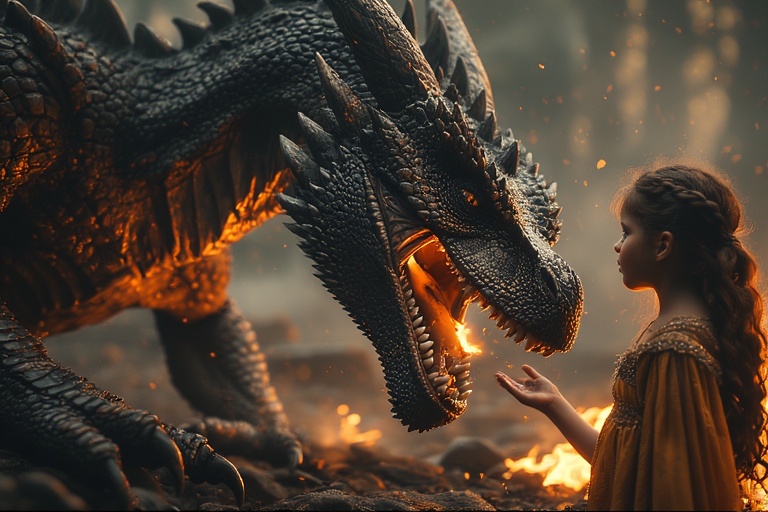
Elara, a twelve-year-old blacksmith’s daughter, discovers her latent power to tame dragons after a desperate battle with Dragonia, a fearsome black-scaled beast threatening her village, Valerion. Guided by Lady Janely, a wise elder with a mysterious past, Elara learns to harness her abilities, forge an unbreakable bond with Dragonia, and lead a daring mission to save her people from an encroaching dark force and beyond to explore the Hitherlands and the Yonderlands… #YA #Dragons #Fantasy #Drama #Epic
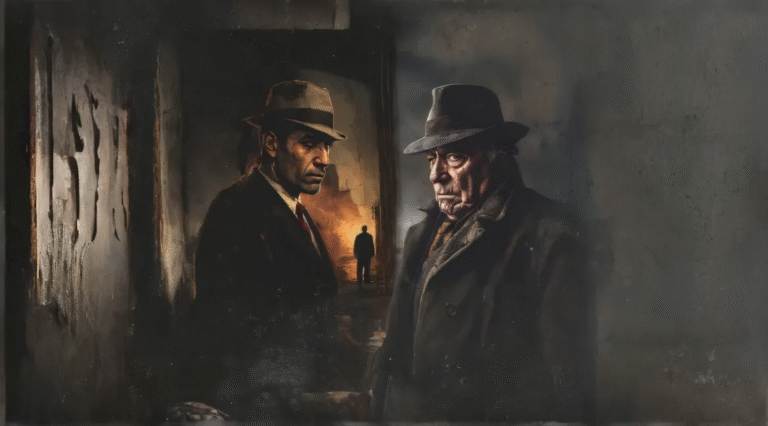
The city sprawled beneath him, a glittering tapestry woven with threads of ambition and illuminated by a million indifferent stars. From the aerie of his penthouse, high above the cacophony of the streets, Vinny LaRosa surveyed his kingdom. It wasn’t a kingdom of stone and mortar, but of shadow and influence, a sprawling, illicit empire that pulsed with a life of its own. The lights weren’t just streetlamps and neon signs; they were signals, markers of territories controlled, deals brokered, and lives manipulated. Each flicker was a testament to his reach, a silent acknowledgment of the power he wielded. This was the zenith, the apex of his ascent, a plateau of opulence built on a foundation of calculated ruthlessness and an almost supernatural understanding of the human appetite for both order and chaos. #Crime #Fiction #Amazon #KU #Kindle #WGSweet #Mafia #Organizedcrime