https://www.amazon.com/dp/B0G2HS9B6N?binding=kindle_edition&ref=dbs_dp_rwt_sb_pc_tkin #dystopian #apocalyptic #survival #endtimes #amazonfinds #kindle #KindleUnlimited The hot, new, dystopian trilogy that will keep you in suspense. The East Coast Protection Directive was issued for the New York City Police department to take care of the people on the East Coast when the world begin to fall apart. They took that oath to heart…
n the late twenty first century the world went to hell and a true apocalypse began. Not the dead rising, not world war three, just a break down of the entire economic system until everything, everywhere was broken. In New York the East Coast Protection Directive was issued making the East Coast of America the responsibility of the former NYPD. The idea was to be that last bastion of protection. The last hope of normalcy. The goal was to do whatever was in their powers to protect New York and the main part of the East Coast from the gangs and the strong men who were taking over… But then the Vipers Kidnapped Alex’s woman, Maya and all hell broke loose on the East Coast and Alex was out for blood… East Coast Protection Directive: Vendetta Kindle Edition by Wendell Sweet (Author) Format: Kindle Edition Book 3 of 3: East Coast Protection Directive See all formats and editions The hum of the generators was a low, persistent thrum, a mechanical heartbeat in the corpse of a city. It was the only constant in a world that had forgotten what constancy meant. Decades had bled into one another since the Republic had finally, irrevocably, exhaled its last breath. Not with a bang, but a whimper of collapsing infrastructure, a cacophony of failed promises, and the gnawing silence where federal authority once stood. Now, the United States was a mosaic of fractured territories, each a sovereign kingdom ruled by iron fists and desperation. #Dystopian #ApocalypticFiction #PostApocalyptic #Survival #ECPD #Series #Dystopian
East Coast Protection Directive: This is the directive issued by the New York State government just after the world went to hell and the true apocalypse began. The former NYPD police department became the East Coast Protection Directive officers. Their job: To keep citizens safe: That was before things grew worse and there wasn’t much left to protect. Maya: The Mechanic and eventually an officer in her own right. And Alex an NYPD officer work to other to keep what is left of the dying republic alive…
Book Two: Into the Abyss. Audible – Paperback – Kindle and Kindle Unlimited East Coast Protection Directive: Into The Abyss Kindle Edition by Wendell Sweet (Author) Format: Kindle Edition The world, as Alex Chen knew it, had fractured beyond repair. The year was a ghost, a relic of a time when governments held sway and infrastructure meant more than shattered concrete and rusted rebar. America was no longer a nation, but a patchwork quilt of territories, each a desperate scramble for survival. In this mosaic of decay, the East Coast Police Department, or ECPD, stood as a thin, fraying shield. Their jurisdiction, a meager few hundred miles of crumbling asphalt and scattered, desperate outposts, felt less like a territory and more like a last stand. #Dystopian #ApocalypticFiction #PostApocalyptic #Survival #ECPD #Series #Dystopian
This is the first book in the trilogy. Alex Chen, a NYPD officer finds himself in command of the failing NYPD when the directive comes down. The NYPD is the last hope for the East Coast of America. They have been charged with the task to protect the East Coast of America for as long as they can with everything they have. Alex and the men and women he works with take on this task in the beginning of a worldwide apocalypse. Forsaking their own needs to protect the last remnants of America…
East Coast Protection Directive: Fractured Horizon by Wendell Sweet (Author) Format: Kindle Edition Maya Ramos, a miracle worker with grease-stained hands and eyes that saw the soul of an engine, kept these metal titans breathing, her workshop a sanctuary of organized chaos in the surrounding desolation. Alex Chen, a man who had once patrolled the gleaming, albeit corrupt, streets of NYPD, now navigated this shattered world with a heavy heart and an even heavier conscience. The rot heโd fought in the old world had merely spread, festering into a continent-wide plague of desperation. The landscape itself was a testament to the worldโs unraveling. Once vibrant shores were now choked with plastic debris and the skeletal remains of ships, their hulls like beached leviathans. Inland, the arteries of commerce, the highways and byways, had become no-manโs-lands. They were arteries of peril, patrolled by opportunistic raiders and desperate scavengers. The air, thick with the perpetual haze of unchecked industry and the lingering dust of forgotten cataclysms, offered little respite. Each breath was a gamble, a taste of the world’s slow, suffocating demise. Resources were a constant source of conflict. Fuel was hoarded, water purified with desperate ingenuity, and food, when found, was a treasure to be defended with oneโs life. Every settlement was a fortress, every journey a potential battlefield. #Dystopian #ApocalypticFiction #PostApocalyptic #Survival #ECPD #Series #Dystopian
Byย Dell Sweet The Nation series follows a group of survivors as they navigate the changed reality of the apocalypse, where the living are as likely to kill you as the dead are. From Los Angeles to New York and all points in between the survivors come together and begin to live again… #Dystopian #ApocalypticFiction #Readers #DellSweet #EarthsSurvivors Smashwords โ The Nation
The Old West is a collection of five western themed stories set in the old west. Come along for an authentic trip through the west, the way it really was.
Jimson Jones, Sarah Johnson, The Cowboy, The Farmers Wife, To Hang a Thief
An excerpt from: Sarah Jones
One starless night, the tranquility of Harmony Creek was irrevocably broken. The rhythmic chirping of crickets was replaced by the terrifying sounds of shattering glass and panicked screams. A nightmare descended upon the peaceful farm. The familiar comfort of home was replaced by a brutal violence, a darkness that would sear itself into Sarah’s memory forever.
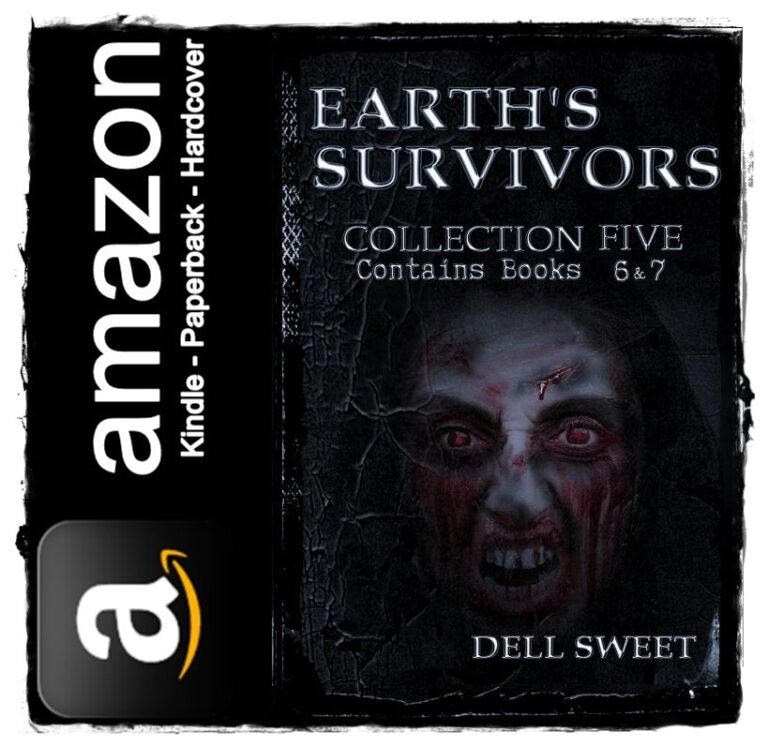
Los Angeles in the midst of the largest extinction event in thousands of years. Billions worldwide will die. Millions will die in North American. #ApocalypticFiction #Readers #Books #BookLovers #WGSweet #EarthsSurvivors
The story of the Neanderthals, or Homo neanderthalensis, is a captivating chapter in the human saga, a tale of a resilient and intelligent hominin species that thrived in the challenging landscapes of Ice Age Eurasia for hundreds of thousands of years. Far from the brutish, simple-minded caricatures of early portrayals, modern archaeology and genetics have revealed them to be a sophisticated and adaptable people, with a history of development and cultural innovation that parallels our own. Their “rise” is not one of global conquest, but rather the story of a lineage that successfully carved out a niche in a harsh, fluctuating environment, becoming the dominant hominin population in their territory long before the arrival of modern humans.
The lineage of the Neanderthals likely diverged from our own shared ancestor, Homo heidelbergensis, approximately 400,000 to 500,000 years ago. While our own ancestors remained in Africa, the ancestors of Neanderthals migrated into Europe and parts of Asia. It was in these northern latitudes, marked by recurring glacial periods and extreme cold, that the Neanderthal form took shape. This prolonged period of isolation and evolutionary pressure led to a distinct set of physical adaptations that set them apart from their African contemporaries. Their robust, stocky bodies, with their broad shoulders and large ribcages, were built for strength and stamina, well-suited for grappling with large prey and enduring the strenuous demands of their lifestyle. Perhaps their most striking feature, the prominent brow ridge and a large, wide nasal cavity, are believed to be specific adaptations for surviving the frigid air, helping to warm and humidify the air they breathed.
For a vast period of prehistory, the Neanderthals were the masters of their domain. From the windswept plains of Iberia to the dense forests of Siberia, they developed a complex tool-making industry known as the Mousterian. Unlike the simpler tools of their predecessors, Mousterian technology involved the systematic preparation of stone cores to create precise, sharp flakes that could be fashioned into a variety of toolsโscrapers for hides, spear points for hunting, and knives for butchery. This sophisticated approach demonstrates a level of forethought and planning that challenges old notions of their cognitive abilities. Their mastery of the landscape extended to hunting, where they were highly effective predators. Evidence suggests they hunted a wide range of animals, from small game to formidable megafauna like woolly mammoths, bison, and rhinos, often using close-quarters ambush tactics that required immense strength and courage.
Beyond their material culture, mounting evidence suggests that Neanderthal society was far from primitive. Archaeological finds have revealed the use of fire for warmth, cooking, and light, and the construction of complex shelters, hinting at a settled lifestyle during certain periods. They cared for their sick and elderly, as evidenced by skeletons of individuals who survived severe injuries or disabilities long after they should have been able to fend for themselves. This compassionate behavior speaks to a strong social fabric and communal support system. There is even a growing body of evidence for symbolic thought and ritualistic behavior. A number of sites show that Neanderthals practiced burial of their dead, and although the exact meaning is debated, it implies a level of abstract thinking about life and death. The discovery of eagle talons fashioned into jewelry, ochre pigments used for body paint or decoration, and even the deliberate arrangement of stalagmites in a cave in France all point to a world of symbolic expression that was once thought to be exclusive to modern humans.
The story of the Neanderthals takes a dramatic turn with the arrival of modern humans, Homo sapiens, into Europe and Asia, beginning approximately 45,000 years ago. For thousands of years, the two hominin groups coexisted, sharing the same landscapes, competing for the same resources, and, as genetic studies have shown, interbreeding. The discovery that most modern non-African humans carry between 1 and 4 percent Neanderthal DNA revolutionized our understanding of our shared past. It confirmed that the two populations not only lived side-by-side but also had intimate encounters that left a lasting genetic legacy.
The eventual disappearance of the Neanderthals from the fossil record around 40,000 years ago remains one of the greatest mysteries in paleoanthropology. A number of theories have been proposed, and it is likely that a combination of factors led to their decline. Climate instability, a succession of rapid warming and cooling events, may have stressed their specialized adaptations. Competition with the newly arrived Homo sapiens for resources, particularly large game, may have also played a role. While the two groups coexisted, modern humans had a number of advantages, including more flexible and complex social networks, more advanced projectile hunting technology, and possibly a more varied diet. Instead of a violent confrontation, the most widely accepted hypothesis suggests a gradual process of assimilation and demographic pressure, where the smaller Neanderthal populations were slowly absorbed and out-competed by the more numerous and technologically diverse Homo sapiens.
In conclusion, the Neanderthals were not a biological dead-end, but a highly successful and sophisticated branch of the human family tree. Their rise was a testament to their incredible ability to adapt and thrive in a hostile world. While their physical form may have faded from existence, their legacy lives on, both in the enduring questions surrounding their final years and, most tangibly, in the fragments of their genome that persist in our own DNA. Their story is a powerful reminder that our past is more interconnected and complex than we once believed, and that our own journey is only a part of a much larger, shared human history.
Read more: Try these Historical Fiction novels…
A Promise across Ancient Terrains
In the ancient past, a cro magnon girl child was born and promised in marriage to a distant related tribe. She has come of age, sixteen and will now be escorted across several hundred miles of wilderness to her soon to be mate in the distant tribe.. Hunters and a medicine woman will accompany her. Once there she will begin her new life and face whatever lies ahead for them… #Prehistoric #CavePeoples #CroMagnon #Readers #HistoricalFiction
Jaquan: Child of the Neanderthals
A young Neanderthal girl is orphaned in a brutal attack and left to survive on her own. This is her story of how she survived, set on the European continent 45,000 years ago… #Readers #BookLovers #BookWorms #HistoricalFiction #DellSweet #Neanderthal
The Bone Clan: Kindle Edition
A loss for the clan starts three members on a search to find a new home for their peopleโฆ
The Clan hurriedly escaped through the treacherous night. Overwhelmed by pain and exhaustion they felt defeated in the face of catastrophe #Prehistoric #HistoricalFiction #WGSweet #Paleolithic #Neanderthal #Denisovans
by Dell Sweet (Author) Format: Kindle Edition To my brothers and sisters on the inside, those whose names I whisper in the quiet hours, those who taught me the brutal calculus of survival: may your scars be badges of your strength, and may your eventual release be a sunrise that washes away the long night. This book is a testament to your resilience, a raw whisper from the belly of the beast. It is for the ones who never made it out, whose lives were extinguished by the system, and whose memories serve as a perpetual warning. #Prison #Crime #Survival #Inside
The world, as Alex Chen knew it, had fractured beyond repair. The year was a ghost, a relic of a time when governments held sway and infrastructure meant more than shattered concrete and rusted rebar. America was no longer a nation, but a patchwork quilt of territories, each a desperate scramble for survival. In this mosaic of decay, the East Coast Police Department, or ECPD, stood as a thin, fraying shield. Their jurisdiction, a meager few hundred miles of crumbling asphalt and scattered, desperate outposts, felt less like a territory and more like a last stand. #Dystopian #ApocalypticFiction #PostApocalyptic #Survival #ECPD #Series #Dystopian
The hum of the generators was a low, persistent thrum, a mechanical heartbeat in the corpse of a city. It was the only constant in a world that had forgotten what constancy meant. Decades had bled into one another since the Republic had finally, irrevocably, exhaled its last breath. Not with a bang, but a whimper of collapsing infrastructure, a cacophony of failed promises, and the gnawing silence where federal authority once stood. Now, the United States was a mosaic of fractured territories, each a sovereign kingdom ruled by iron fists and desperation. #Dystopian #ApocalypticFiction #PostApocalyptic #Survival #ECPD #Series #Dystopian
Take a look at this excerpt from Author W. W. Watson. This is a series of private detective novels. This is from Book 2. Scroll to the bottom of the page to get the book, if you like it, from Amazon…
The sense of closure from the Robert case proved illusory. The cityโs hum, once a comforting backdrop, now felt like a constant, low-level thrum of impending trouble. It started subtly; a missed call from a blocked number, a cryptic email with no sender’s information, a fleeting glimpse of a familiar face in a crowded street that vanished as quickly as it appeared. These were small things, easily dismissed as coincidences, the product of an overactive imagination fueled by months of relentless investigation and emotional turmoil. But they chipped away at my newfound peace, a slow, insidious erosion of calm.
Then came the letter. A simple, unmarked envelope slipped under my apartment door, containing a single photograph โ a grainy, poorly lit image of Sally standing outside a dimly lit bar, a manโs arm draped possessively around her shoulders. The man’s face was obscured by shadow, but the silhouette, the posture, the way he held herโฆ it was chillingly familiar.
My stomach clenched. I knew that face. Or at least, I knew the
shape of it. It resonated with a memory, buried deep beneath the layers of recent trauma, a fleeting image from a case I’d worked years ago โ a case involving a brutal assault, a string of unsolved disappearances, a network of organized crime that had stretched far beyond my reach. The man in the photograph, I was almost certain, was a peripheral figure from that investigation, someone Iโd only caught a glimpse of, a shadowy figure on the edge of the frame. Someone I’d never been able to identify, someone who’d vanished without a trace.
The implications were staggering. My investigation into Robertโs infidelity had inadvertently unearthed something far more sinister, something that connected to a dark chapter in my past, a case that had haunted me for years. It was a chilling revelation, a cruel twist of fate that thrust me back into the murky waters of organized crime. This wasn’t just about a broken marriage anymore; this was about something far bigger, far more dangerous.
The photograph wasn’t just a threat; it was a challenge. A gauntlet thrown down, daring me to pick it up and face the consequences. The carefully constructed peace Iโd worked so hard to achieve was shattered, replaced by a familiar knot of anxiety that tightened in my chest. The nightmares returned, sharper, more vivid, filled with distorted faces and the chilling whisper of impending danger.
My cautious, methodical approach, honed over years of experience, was suddenly inadequate. This wasnโt a simple infidelity case; this was a potential descent into a dangerous underworld. I needed to tread carefully, to plan each step meticulously. I couldn’t afford to make a mistake; the consequences could be devastating.
My first step was to verify the photograph. Was it a genuine image, or a carefully constructed fabrication designed to manipulate, to provoke a reaction? The quality of the photograph was poor, the details obscured, but there were subtle elements that suggested authenticity โ the subtle grain, the way the light fell on the building in the background, the slightly blurry details that hinted at a hasty, clandestine shot.
I ran the image through various forensic enhancement programs, pushing the pixels to their limits, attempting to coax more information from the shadows. The results were frustratingly inconclusive. The manโs face remained obscured, his features hidden beneath the veil of darkness. But I did find something else โ a barely visible detail in the background of the image โ a street sign, partially obscured, but identifiable as a street located in the city’s less desirable district, known for its high crime rate and its connection to several organized crime syndicates.
The location provided a starting point. I checked local police reports, scouring databases for any activity in that area that might shed light on the man’s identity or Sally’s activities. There was nothing immediately obvious; the police reports were a sea of mundane incidents โ petty theft, domestic disputes, vandalism. But something felt off. The sheer volume of minor offenses, their clustering within a small geographical area, suggested a pattern, a suggestion of organized crime operating at a low level, using the smaller crimes as a distraction or as a way to maintain control over the territory.
My investigation led me down a rabbit hole of back alleys, shady bars, and clandestine meetings. I spent nights following shadows, observing individuals who seemed to exist on the periphery of the city’s underbelly. The investigation was a slow, painstaking process, a delicate dance between observation and discretion. One wrong move, one misplaced step, could have dire consequences.
Days bled into weeks, the anxiety a constant companion. Sleep offered little respite, the dreams a chaotic mixture of blurred faces, cryptic messages, and the suffocating weight of impending danger. My old fears returned, sharper and more intense than ever before. The memory of the near-fatal incident with my friend, the agonizing physical and emotional pain, felt like a constant threat, a stark reminder of the dangers inherent in this line of work.
I sought guidance from my therapist, Dr. Evans. He listened patiently, offering words of encouragement and practical advice. He reminded me of the importance of self-care, of the need to maintain a balance between my work and my personal life. His words were calming, his presence a source of strength and stability in a world that was increasingly uncertain.
Through the fog of fear and uncertainty, a new understanding started to emerge. This wasnโt just about solving a case; it was about protecting Sally, about preventing a potential tragedy. The stakes were high, the risks considerable. But I couldnโt stand idly by. The sense of responsibility, the weight of the potential consequences, drove me forward. The fight was on, and this time, it was personal. The shadows loomed large, but the flickering flame of determination within me burned brighter than ever. The city held its breath, oblivious to the storm brewing beneath its surface. I was ready.
The city’s underbelly, once a distant, shadowy realm I only glimpsed from afar, now felt unnervingly close. The investigation into Sallyโs husband’s infidelity had led me down a rabbit hole, and I was rapidly losing sight of the surface. The blurry photograph, the ominous location, the sheer volume of seemingly unrelated petty crimes in that specific area โ all pointed to something far more intricate and dangerous than I had initially anticipated.
My next step involved deep dives into the cityโs databases, exploring connections beyond the police reports. I focused on property records, business licenses, and even social media profiles of residents in the area identified in the photo. The digital breadcrumbs were sparse, but they began to reveal a pattern. Several businesses in that area, seemingly legitimate establishments like a laundromat, a small grocery store, and a repair shop, were registered to shell corporations, their ownership obscured by layers of anonymous holding companies. The addresses, however, all clustered around the same few blocks.
This pointed towards a money-laundering operation, a classic front for a larger criminal enterprise. I recalled a similar tactic used by the organization Iโd encountered years ago, the one that had left a trail of unsolved disappearances in its wake. The chilling similarity sent a shiver down my spine. Could this be a splinter group? A resurgence of the same organization? Or something entirely new, using similar methods?
I spent days observing these seemingly innocuous businesses. I watched people coming and going, noting license plates, making mental notes of faces and interactions. I learned to recognize the subtle cues โ the furtive glances, the hushed conversations, the nervous fidgeting, the almost imperceptible exchange of small, unmarked packages. The seemingly ordinary citizens were playing a crucial role in a far larger, more sinister game.
One evening, while observing the laundromat, I witnessed a meeting that sent a jolt of adrenaline through me. Two men, both dressed in unremarkable clothes, met in a secluded corner of the parking lot. One was short, stocky, with a face etched with years of hard living; the other was taller, leaner, with a cold, calculating gaze. They spoke in hushed tones, occasionally glancing over their shoulders, their body language betraying a deep-seated unease.
Using my long-range lens, I managed to capture a brief glimpse of what they were exchanging โ a small, leather-bound book, seemingly innocuous at first glance. But closer examination revealed a series of intricate symbols embossed on the cover. These symbols, I realized with a jolt of recognition, were similar to the ones Iโd encountered in the old case files, symbols used by the organized crime syndicate Iโd battled years before.
The book, I suspected, contained vital information โ perhaps a ledger of transactions, a list of members, or even a detailed plan for a major operation. My gut instinct screamed that this was my key to understanding the larger network. Securing that book was now my top priority.
The following days were a whirlwind of planning and preparation. I reviewed my previous surveillance techniques, refining them, incorporating new elements learned over the years. The challenge was significant: the men were obviously cautious, aware of potential surveillance. They were professionals. I needed a strategy that minimized my risk, maximized my chance of success, and left no trace of my involvement.
I mapped out the men’s movements, noting their routines, their preferred routes, their meeting points. I identified the blind spots in their security, the moments when their attention was diverted, the windows of opportunity. I devised a plan โ a carefully orchestrated sequence of events designed to snatch the book without raising their suspicion.
The execution of the plan required nerves of steel and precision timing. It involved a carefully planned diversion, a subtle manipulation of their routine, and a daring snatch-and-grab operation under the cover of darkness. The risk was considerable. One wrong move could expose me, not only jeopardizing the investigation but potentially putting Sally in harm’s way.
The night of the operation arrived, cold and damp, the city lights reflecting in the puddles on the slick pavements. My heart pounded in my chest, a frantic drumbeat accompanying my every step. I moved like a ghost, my movements fluid and silent, blending into the cityโs nocturnal tapestry.
The diversion went off without a hitch. The distraction created the necessary opening, allowing me to approach the meeting point undetected. The snatch itself was swift and clean, a blur of motion and a decisive grab. Before the men could react, I was gone, melting back into the shadows, the leather-bound book safely secured in my possession.
The bookโs contents revealed a network far more extensive than I had imagined. It detailed a sophisticated money-laundering scheme, an intricate web of shell corporations, and a series of planned illicit activities that stretched far beyond the city limits. The names and aliases mentioned were chillingly familiar โ echoes from the past, remnants from my previous encounters with the organization.
The implications were profound. This wasn’t simply a case of infidelity; it was a major criminal operation, with far-reaching implications. I had stumbled onto something far bigger, far more dangerous than I ever could have anticipated. The city, its bustling life continuing oblivious, held its breath, a storm brewing under its seemingly calm surface, a storm I was now squarely in the middle of. And as I delved deeper, I realized the true magnitude of the threat, a threat that extended far beyond Sally and her husband’s personal drama. This was a fight for survival, not just for myself, but potentially for the city itself. The stakes were impossibly high, and I was prepared to pay the price.
The leather-bound book, now safely tucked away in my apartment, felt heavier than its actual weight. Its contents were a damning indictment of a criminal network I had only glimpsed years ago, a network that seemed to have resurfaced with renewed vigor and sophistication. The intricate web of shell corporations, the coded language, the subtle allusions to future operations โ it was all a testament to their meticulous planning and their chilling efficiency. But the book also revealed something unexpected, something that added a whole new layer of complexity to the case: a series of names, seemingly unconnected to the money-laundering scheme, yet intricately woven into the fabric of the organization. These names belonged to individuals I knew โ some acquaintances from the police department, others from the shadowy world of private investigation.
The realization sent a cold wave of dread through me. It wasn’t just a case of organized crime; it was a conspiracy that reached into the very institutions I had trusted, the people I had considered allies. The lines between right and wrong, between friend and foe, had become hopelessly blurred. I was forced to confront the unsettling truth that some of the people Iโd interacted with over the years might be complicit, knowingly or unknowingly, in this criminal enterprise.
The weight of this revelation forced me to re-evaluate my approach. I couldn’t just rely on my instincts and investigative skills; I needed a more strategic approach, one that navigated the treacherous waters of betrayal and hidden allegiances. My network of contacts, once a reliable source of information, now seemed unreliable, possibly compromised. Every conversation, every exchange of information, was now fraught with suspicion, a minefield of potential deception…
Get this book at Amazon…
My apartment, usually a sanctuary of quiet solitude, became a temporary forensic lab. The dining table transformed into a command center, littered with maps, photographs, financial records, and transcripts of intercepted phone calls. The air hung heavy with the scent of stale coffee and the lingering aroma of cheap takeout containers. Days bled into nights as I painstakingly organized the evidence, meticulously documenting every detail, creating a comprehensive narrative that would stand up to the scrutiny of the legal system… #BookWorm #Readers #KindleUnlimited #WWWatson #Crime #Noir #Mystery #PrivateEye
So, first, the mother did come back for them, so don’t worry.
I don’t know what raccoons do, hunt for food? Gather? In any case the babies slipped out through a hole in the old shed they live in while mom was out doing whatever mother raccoons do. They found their way to an old side porch we only use for the cats and Amber (My Wife) and I put out some cat food to feed them thinking they would eat it.
They did, and, eventually mother raccoon came back. She was very pissed-off that we had kidnapped her raccoon babies. She wouldn’t come down from the shed, but prowled the roof edge, so I took each baby and lifted them up to her. Thank God she wasn’t rabid and bit me. I really wanted to keep one that came over, crawled into my lap and went to sleep. Amber said no and the mother raccoon would have probably killed me too.