The ‘Sea Wanderer,’ their forty-foot sloop, was more than just a vessel; it was their sanctuary, their laboratory, and their chariot to a world unknown. Years of meticulous planning had gone into her outfitting, every piece of equipment chosen for its reliability and suitability for long-distance cruising. Solar panels were integrated into the deck’s design, promising a sustainable source of power, while a robust water filtration system was a testament to their commitment to self-sufficiency. Their stores were a carefully curated blend of practicality and foresight, reflecting Sarah’s talent for organization and Mark’s insistence on preparedness. They had even managed to pack a small, yet promising, hydroponic garden kit, a hopeful nod to their landlocked life and a potential source of fresh greens should their culinary adventures on the ocean prove less bountiful. #Ocean #Sea #Adventure #Shipwrecked #eBooks #Kobo #SciFi #Fantasy
John Dillinger was born on June 22, 1903, in Indianapolis, Indiana, to John Wilson Dillinger Sr. and Elizabeth “Lizzie” Wilson. His early life was marked by tragedy when his mother died in childbirth when he was just four years old. His father remarried, but John’s relationship with his stepmother was strained. He grew up in a grocer’s store where his father worked and was known to be a bit of a troublemaker as a child.
Dillinger’s life of crime began early. At 21, he was arrested for theft and sentenced to 10-20 years in prison. During his time at the Indiana State Prison in Michigan City, he befriended several other notorious criminals, including Homer Van Meter and Harry Pierpont. These relationships would later shape his criminal career.
After serving nine years, Dillinger was paroled in 1933. However, he soon returned to crime, committing a series of bank robberies across the Midwest. His exploits earned him the nickname “Public Enemy No. 1” from the FBI. Dillinger’s notoriety grew, and he became a folk hero of sorts, with many people sympathizing with his actions against banks, which were seen as symbols of the economic hardship of the Great Depression.
One of the most significant figures in Dillinger’s life during this period was Polly Hamilton, a young woman he met while still in prison. She became his girlfriend and visited him regularly during his incarceration. Their relationship continued after his release, and Polly often accompanied Dillinger on his robberies.
Another crucial figure in Dillinger’s life was Anna Sage, also known as “Woman in Red.” Sage, a Romanian-American woman, had her own criminal record and became involved with Dillinger. She played a pivotal role in his eventual demise. Sage, who had been in trouble with the law and was facing deportation, agreed to cooperate with the FBI in exchange for leniency on her own charges. She lured Dillinger to the Biograph Theater in Chicago, where he was watching a movie, promising him a night out.
On July 22, 1934, outside the Biograph Theater, FBI agents ambushed Dillinger as he left the movie. Sage, wearing a red dress that would become infamous, was with him. The FBI agents, led by Melvin Purvis, had been informed of Dillinger’s presence by Sage. As Dillinger attempted to draw his gun, he was shot multiple times. He died shortly after, at the age of 31.
Dillinger’s life of crime and his eventual death captivated the nation. His exploits were widely covered in the media, and his legend grew as a result. Despite his notoriety, Dillinger’s actions were often romanticized, and he became a symbol of rebellion against the system.
Interestingly, Dillinger’s criminal career was marked by several close calls and narrow escapes. He was known for his brazen robberies and his ability to evade capture. However, his relationship with Anna Sage ultimately proved to be his downfall.
The Biograph Theater, where Dillinger met his end, still stands in Chicago and has become a piece of American history. Visitors can see the theater and learn more about the events that transpired there. Dillinger’s legacy continues to fascinate people, and his story remains one of the most infamous in American crime history.
In the years following Dillinger’s death, the FBI’s reputation grew significantly, and Melvin Purvis became a national hero. However, the role of Anna Sage in Dillinger’s death has been the subject of much debate. While some view her as a traitor, others see her as a pragmatic woman who made difficult choices to save herself.
Dillinger’s impact on popular culture is undeniable. He has been the subject of numerous films, books, and documentaries. The 1945 film “Dillinger” and the 1973 film “Dillinger” starring Warren Oates are just a couple of examples. More recently, the 2009 film “Public Enemies” directed by Michael Mann and starring Johnny Depp as Dillinger, brought his story to a new generation.
John Dillinger’s life was a complex mix of tragedy, crime, and notoriety. From his early days in Indianapolis to his eventual death in Chicago, his story is a fascinating and cautionary tale of the allure and consequences of a life of crime. Despite the passage of time, Dillinger’s legend endures, captivating audiences and reminding us of the darker side of the American Dream.
Dillinger’s robberies often involved careful planning and execution. He and his gang would meticulously plan each heist, using stolen cars and guns to carry out their crimes. Dillinger’s brazen nature and charm made him a compelling figure, both to the public and to those who knew him personally.
The FBI’s pursuit of Dillinger was relentless. Led by agents like Melvin Purvis…
The King is dead, the headlines screamed. A hard, hard day. But, what if the king wasn’t dead? What if the king just got fed up with all of it and called it quits…
The quiet cadence of Aaron’s days was rarely broken by external disruptions. His hermitage in the bayou was, by design, an exercise in profound isolation. Yet, the world, like an persistent tide, would occasionally lap at the shores of his self-imposed exile. These intrusions were not of the dramatic, attention-grabbing variety that had once defined his existence. Instead, they arrived as fleeting whispers, carried on the humid air or snagged by the errant radio waves that sometimes pierced the dense foliage surrounding his cabin. #Mystery #ElvisPresley #Whatif #KU #Kindle #Readers #DellSweet
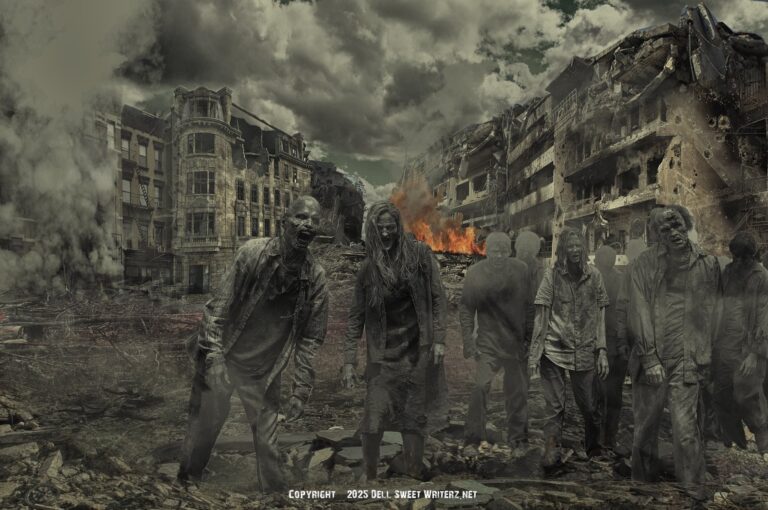
The newfound resources provided a small measure of comfort, but the shadow of suspicion and mistrust lingered, a constant threat to their already precarious existence. They had survived the attack, but the war within Rapid City had only just begun, a war fought not with guns and blades, but with suspicion, betrayal, and the relentless erosion of trust. The fight for survival, once focused on the undead hordes, had shifted to a more insidious adversary – human nature itself. Their journey toward survival was far from over; the road ahead remained treacherous, fraught with uncertainty, a path paved with the ghosts of betrayal and the chilling reality of their world. The scars of the conflict, both physical and emotional, would serve as a constant reminder of the brutal price of survival.
The silence that followed was a heavy thing, pressing down on them like the weight of the snow accumulating on the rooftops of Rapid City. The air, thick with the metallic tang of blood and the acrid stench of death, seemed to suffocate them. Even the rhythmic drip, drip, drip of melting snow from a broken pipe felt amplified in the oppressive quiet, each drop a morbid metronome marking the passage of time in this ravaged world.
Gary stared at his hands, the calluses and grime a stark reminder of his own brutality. He’d killed men before – the undead, mostly – but these deaths felt different. These were men he’d once considered friends, colleagues in the desperate struggle for survival. The faces of Silas’s followers haunted him – the wide-eyed terror of the young man, the grim resignation of the older ones. He had taken lives, and the weight of those actions settled heavily on his conscience, a crushing burden that no amount of practical necessity could ever fully alleviate.
Anya, her face pale and drawn, leaned against a crumbling wall, her breath coming in ragged gasps. The crude spear she clutched, still stained with blood, seemed to tremble in her grip. The strength she’d displayed during the fight, the unexpected surge of primal fury, had deserted her. The reality of her actions, the stark brutality of killing another human being, was beginning to settle upon her like a suffocating blanket.
Robert, ever the pragmatist, began to systematically gather the remaining supplies. He moved with an almost ritualistic precision, collecting the weapons, ammunition, and the meager rations Silas had stashed away. The efficiency was stark, almost clinical, a stark contrast to the raw emotion that consumed Gary and Anya.
The journey back to Rapid City was arduous, the weight of their shared experience heavier than the snow under their boots. The landscape, once simply a hostile environment, now felt imbued with the ghosts of their actions, a macabre landscape mirroring the turmoil within their hearts. The wind howled, a mournful keening that seemed to echo their own inner struggles. Each step was a testament to their resilience, but also a painful reminder of the moral compromises they had made.
The relative safety of Rapid City’s makeshift walls offered little solace. The community, once a beacon of hope in a desolate world, was fractured, the sense of shared purpose and collective survival threatened by suspicion and fear. The news of Silas’s betrayal and the bloody confrontation spread like wildfire, each whispered conversation adding fuel to the already raging fire of distrust. Long-held alliances were questioned, loyalties tested, and the very fabric of their society began to unravel.
The Rise of the Neanderthals: A Journey Through Human Prehistory
The story of the Neanderthals, or Homo neanderthalensis, is a captivating chapter in the human saga, a tale of a resilient and intelligent hominin species that thrived in the challenging landscapes of Ice Age Eurasia for hundreds of thousands of years. Far from the brutish, simple-minded caricatures of early portrayals, modern archaeology and genetics have revealed them to be a sophisticated and adaptable people, with a history of development and cultural innovation that parallels our own. Their “rise” is not one of global conquest, but rather the story of a lineage that successfully carved out a niche in a harsh, fluctuating environment, becoming the dominant hominin population in their territory long before the arrival of modern humans.
The lineage of the Neanderthals likely diverged from our own shared ancestor, Homo heidelbergensis, approximately 400,000 to 500,000 years ago. While our own ancestors remained in Africa, the ancestors of Neanderthals migrated into Europe and parts of Asia. It was in these northern latitudes, marked by recurring glacial periods and extreme cold, that the Neanderthal form took shape. This prolonged period of isolation and evolutionary pressure led to a distinct set of physical adaptations that set them apart from their African contemporaries. Their robust, stocky bodies, with their broad shoulders and large ribcages, were built for strength and stamina, well-suited for grappling with large prey and enduring the strenuous demands of their lifestyle. Perhaps their most striking feature, the prominent brow ridge and a large, wide nasal cavity, are believed to be specific adaptations for surviving the frigid air, helping to warm and humidify the air they breathed.
For a vast period of prehistory, the Neanderthals were the masters of their domain. From the windswept plains of Iberia to the dense forests of Siberia, they developed a complex tool-making industry known as the Mousterian. Unlike the simpler tools of their predecessors, Mousterian technology involved the systematic preparation of stone cores to create precise, sharp flakes that could be fashioned into a variety of tools—scrapers for hides, spear points for hunting, and knives for butchery. This sophisticated approach demonstrates a level of forethought and planning that challenges old notions of their cognitive abilities. Their mastery of the landscape extended to hunting, where they were highly effective predators. Evidence suggests they hunted a wide range of animals, from small game to formidable megafauna like woolly mammoths, bison, and rhinos, often using close-quarters ambush tactics that required immense strength and courage.
Beyond their material culture, mounting evidence suggests that Neanderthal society was far from primitive. Archaeological finds have revealed the use of fire for warmth, cooking, and light, and the construction of complex shelters, hinting at a settled lifestyle during certain periods. They cared for their sick and elderly, as evidenced by skeletons of individuals who survived severe injuries or disabilities long after they should have been able to fend for themselves. This compassionate behavior speaks to a strong social fabric and communal support system. There is even a growing body of evidence for symbolic thought and ritualistic behavior. A number of sites show that Neanderthals practiced burial of their dead, and although the exact meaning is debated, it implies a level of abstract thinking about life and death. The discovery of eagle talons fashioned into jewelry, ochre pigments used for body paint or decoration, and even the deliberate arrangement of stalagmites in a cave in France all point to a world of symbolic expression that was once thought to be exclusive to modern humans.
The story of the Neanderthals takes a dramatic turn with the arrival of modern humans, Homo sapiens, into Europe and Asia, beginning approximately 45,000 years ago. For thousands of years, the two hominin groups coexisted, sharing the same landscapes, competing for the same resources, and, as genetic studies have shown, interbreeding. The discovery that most modern non-African humans carry between 1 and 4 percent Neanderthal DNA revolutionized our understanding of our shared past. It confirmed that the two populations not only lived side-by-side but also had intimate encounters that left a lasting genetic legacy.
The eventual disappearance of the Neanderthals from the fossil record around 40,000 years ago remains one of the greatest mysteries in paleoanthropology. A number of theories have been proposed, and it is likely that a combination of factors led to their decline. Climate instability, a succession of rapid warming and cooling events, may have stressed their specialized adaptations. Competition with the newly arrived Homo sapiens for resources, particularly large game, may have also played a role. While the two groups coexisted, modern humans had a number of advantages, including more flexible and complex social networks, more advanced projectile hunting technology, and possibly a more varied diet. Instead of a violent confrontation, the most widely accepted hypothesis suggests a gradual process of assimilation and demographic pressure, where the smaller Neanderthal populations were slowly absorbed and out-competed by the more numerous and technologically diverse Homo sapiens.
In conclusion, the Neanderthals were not a biological dead-end, but a highly successful and sophisticated branch of the human family tree. Their rise was a testament to their incredible ability to adapt and thrive in a hostile world. While their physical form may have faded from existence, their legacy lives on, both in the enduring questions surrounding their final years and, most tangibly, in the fragments of their genome that persist in our own DNA. Their story is a powerful reminder that our past is more interconnected and complex than we once believed, and that our own journey is only a part of a much larger, shared human history.
Check out this historical fiction that paints a clearer picture of those ancient peoples…
A Promise across Ancient Terrains
In the ancient past, a cro magnon girl child was born and promised in marriage to a distant related tribe. She has come of age, sixteen and will now be escorted across several hundred miles of wilderness to her soon to be mate in the distant tribe.. Hunters and a medicine woman will accompany her. Once there she will begin her new life and face whatever lies ahead for them… #Prehistoric #CavePeoples #CroMagnon #Readers #HistoricalFiction
Jaquan: Child of the Neanderthals
A young Neanderthal girl is orphaned in a brutal attack and left to survive on her own. This is her story of how she survived, set on the European continent 45,000 years ago… #Readers #BookLovers #BookWorms #HistoricalFiction #DellSweet #Neanderthal
The Bone Clan: Kindle Edition
A loss for the clan starts three members on a search to find a new home for their people…
The ancient clan in prehistoric Europe, 85,000 years ago, faced a devastating attack that forced them out of their high stone shelter. With many losses, particularly among the young and elderly, they realized the crucial role fire played in their survival. The strongest members of the clan took charge and decided to send out hunters to retrieve fire from a new source, while the rest of the clan remained behind, anxiously awaiting the return of their life-sustaining flame…
The Demise of Fire The Clan hurriedly escaped through the treacherous night. Overwhelmed by pain and exhaustion, they felt defeated in the face of catastrophe: the Fire had perished. They had diligently tended to the glowing embers within three enclosures ever since the Fire had initially brought the Clan together as a community. The Fire had united them with its comforting warmth and safeguarding presence. Vigilantly, four women and two warriors nourished the flickering flames day and night. Even during the bleakest moments, they cherished the flame, providing it with whatever it required to sustain itself. They shielded it from harsh downpours, sheltered it from violent storms, elevated it above the floodwaters, and cradled it while crossing rivers and swamps. The Fire never let them down. In the morning, it sported a blue tail, transforming into a crimson streak as the encompassing darkness of night descended upon them. Its enchantment repelled the black lion and the yellow lion, the cave bear and the gray bear, the mammoth, the tiger, and the leopard—its fiery jaws defended them against a vast and perilous world. All happiness emanated from its comforting heat. It carried the aroma of sizzling meat, hardened the tips of spears, and fractured solid stones. Its lively flames exuded a delightful warmth. It provided solace to the fearful horde amidst the foreboding forests, across the boundless savannah, and within the deepest recesses of dank and dripping caverns. It was the Father, the Guardian, the Savior—yet it possessed a ferocity and terror greater than even the mammoths when it escaped its confines and voraciously consumed the trees, ravenous and roaring!
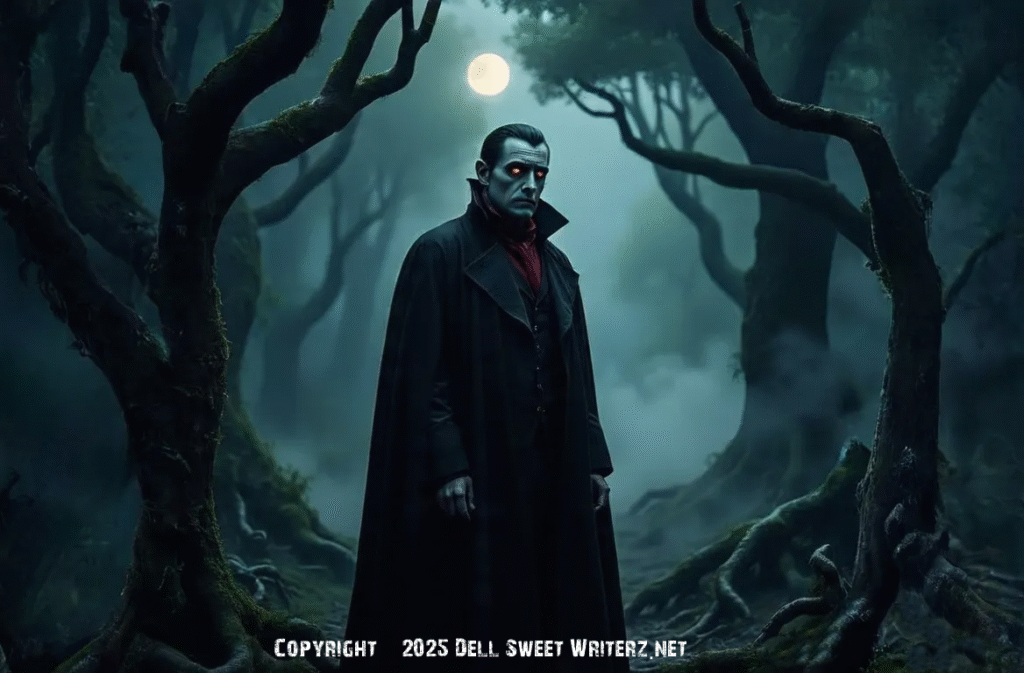
The whispers of the undead were not confined to gothic novels or campfire stories; they were woven into the hidden history of the city, particularly within the shadowy tapestry of the Valois lineage. For generations, the family had been privy to this ancient truth, a truth that set them apart, a truth that granted them a terrible longevity and a terrifying power. This wasn’t a history learned from books, but a legacy inherited, a curse passed down, a dark bargain that had been struck in the shadows of centuries past, ensuring their continued dominance. #Vampire #Vampires #Horror #Readers #KU #Amazon
The gritty concrete pressed against my cheek, cold and unforgiving. A dull, throbbing ache pulsed behind my eyes, radiating outwards to claim every muscle, every fiber of my being. My body felt heavy, leaden, as if anchored to the ground by unseen chains. The air hung thick and cloying, a miasma of decay and something else… something feral, something primal. I coughed, the taste of blood metallic on my tongue, a coppery tang that clung to the back of my throat. #Horror #Thriller #Romance #Readers #Kobo #WGSweet
The nightmare would begin insidiously, with the faintest whisper of a sound, a familiar vibration that would build, slowly at first, then with terrifying speed. It was the hum of the engine, the low thrum of the car carrying them towards an unseen precipice. He would feel the familiar press of the seat beneath him, the faint scent of Ann’s perfume, a scent that would soon be overwhelmed by the acrid stench of burnt rubber and fear. Then, the unmistakable sound, the prelude to chaos: the high-pitched shriek of tires desperately seeking purchase on asphalt, a sound that ripped through the fabric of the night and into the very marrow of his bones… #Horror #Thriller #Romance #Readers #Kobo #WGSweet
Great question! While the brand name Chevrolet itself has French roots—it’s the surname of Louis Chevrolet, a Swiss-born race car driver with French linguistic heritage—the actual vehicle names from Chevrolet aren’t typically derived from French words.
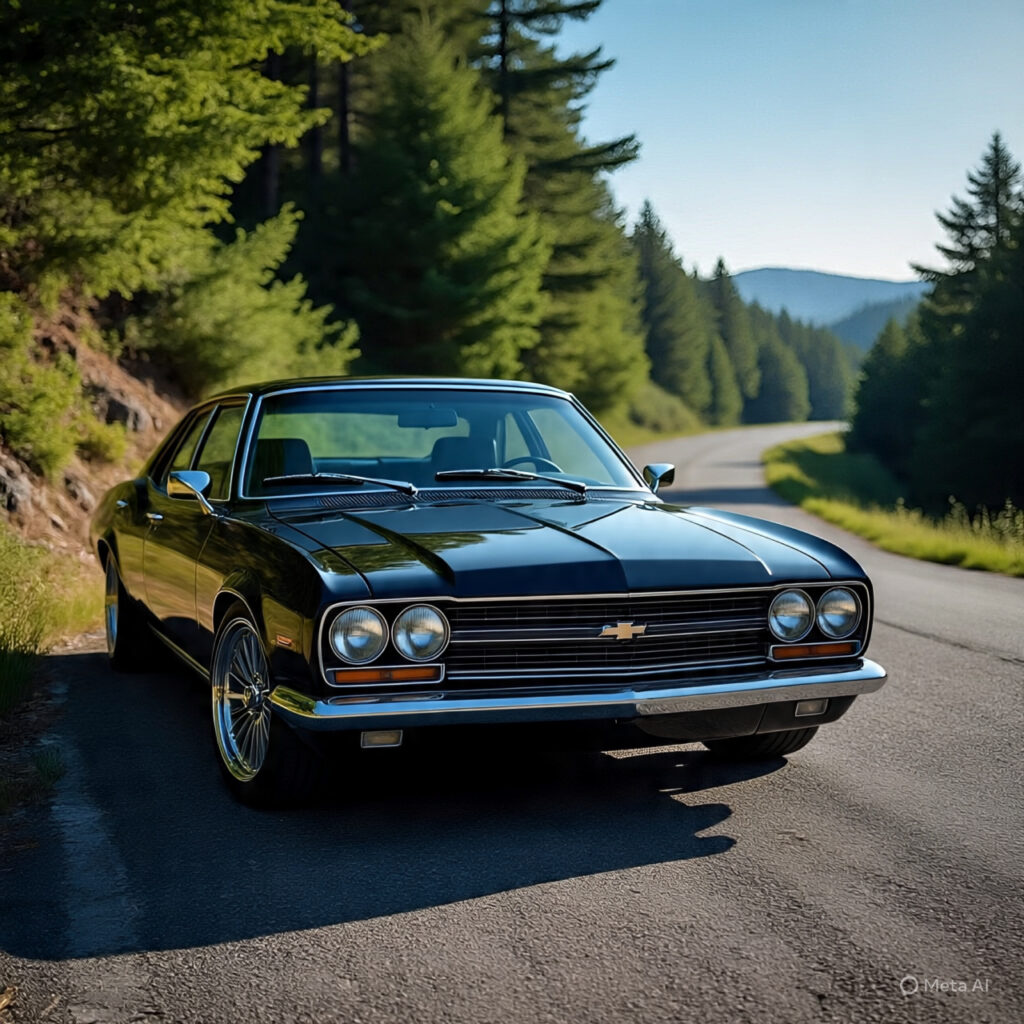
Here’s a breakdown:
🏁 The Name “Chevrolet”
Origin: Named after Louis Chevrolet, co-founder of the company in 1911.
Linguistic roots: The surname “Chevrolet” sounds French and includes the diminutive suffix “-et,” common in French names like ballet or omelet2.
Meaning: Despite the French sound, it’s a surname—not a word with a specific meaning in French.
🚗 Vehicle Names with French Influence?
Most Chevrolet vehicle names are not French. They tend to be:
English descriptors (e.g., Cruze, Trailblazer, Silverado)
Spanish or Latin-inspired (e.g., Camaro—possibly from a French slang term meaning “friend,” though this is debated)
Invented or stylized names (e.g., Equinox, Tahoe, Blazer)
🤔 What About “Camaro”?
This one’s interesting:
Chevrolet claimed Camaro meant “friend” in French slang when it launched in the 1960s.
However, no such word exists in standard French. It’s likely a marketing invention with a French flavor to evoke camaraderie and style.
So while the brand carries a French-sounding name, the vehicles themselves are mostly named with American flair or global appeal, not directly from French vocabulary.
🏁 Formation of Chevrolet Motor Company
Founded: November 1911
Founders: Louis Chevrolet, a Swiss-born race car driver, and William C. Durant, a visionary businessman who had previously founded GM in 1908.
Purpose: After Durant was ousted from GM in 1910 due to overexpansion and financial troubles, he launched Chevrolet to compete with Ford’s Model T and regain influence in the auto industry.
Early Success: Chevrolet quickly gained traction, turning a profit and building a reputation for stylish, reliable cars.
🔄 Acquisition by General Motors
Date of Acquisition: May 2, 1918
How It Happened: Durant used Chevrolet’s success to buy up GM stock. In a strategic move, he offered GM shareholders five shares of Chevrolet for every one share of GM. The offer was irresistible, and it allowed Durant to reclaim control of GM.
Irony: Durant had been forced out of GM in 1910, only to return by merging it with the company he built after his exile.
Aftermath: Durant became GM’s president again—but only briefly. In 1920, financial troubles returned, and Pierre S. DuPont took control, permanently removing Durant from GM.
🚘 Legacy

Chevrolet became a cornerstone of GM’s brand portfolio, known for iconic models like the Corvette, Camaro, and Silverado.
The merger helped GM dominate the American auto industry for decades, with Chevrolet playing a key role in its rise.
It’s a classic tale of comeback and corporate chess. Want to explore how Chevrolet’s early models stacked up against Ford’s at the time?
Ford Model T (1908–1927)
Price: Dropped to under $300 by the mid-1920s thanks to Ford’s revolutionary assembly line.
Engine: 2.9L inline-4, ~20 horsepower.
Strengths:
Mass production = affordability.
Durable and simple to maintain.
Became the symbol of American mobility.
Weaknesses:
Spartan features.
Manual crank start (early models).
Limited styling and comfort.
🚘 Chevrolet Series 490 (1915–1922)
Price: Introduced at $490, hence the name.
Engine: 171 cu in inline-4, ~24 horsepower.
Strengths:
More advanced tech: overhead valve engine, electric starter, better instrumentation.
Smoother ride and more refined interior.
Positioned as “more car for the same money.”
Weaknesses:
Slightly higher price.
Less brand recognition early on.
⚔️ Head-to-Head Highlights
Feature Ford Model T Chevy Series 490
Price ~$300 (1920s) $490 (intro price)
Horsepower ~20 HP ~24 HP
Starter Manual (early) Electric (later models)
Transmission 2-speed planetary 3-speed manual
Market Position Mass-market leader Challenger with upgrades
🏁 Outcome
Ford dominated early on, selling millions of Model Ts.
Chevrolet slowly gained ground with better features and comfort.
By 1927, Ford shut down Model T production to retool for the Model A, and Chevrolet surpassed Ford in sales for the first time.
🚗 Ford Model A (1928–1931)
Engine: 3.3L inline-4, producing 40 horsepower
Transmission: 3-speed manual
Price: Around $495 for a Tudor Sedan
Strengths:
Stylish design by Edsel Ford
Reliable and easy to maintain
Came in multiple colors (unlike the Model T’s “any color as long as it’s black”)
Weaknesses:
Still a 4-cylinder, while competitors were moving to six
Basic interior and limited features
🛠️ Chevrolet Stovebolt Six (1929)
Engine: 3.2L inline-6, producing 46 horsepower initially, later boosted to 50+ HP
Marketing tagline: “A Six for the Price of a Four”
Strengths:
Smoother performance and more power than Ford’s 4-cylinder
Advanced engineering with OHV design
Only about $100 more than the Model A
Impact:
Helped Chevrolet regain the sales lead from Ford in 1931
Became the foundation of Chevy’s engineering reputation for decades
⚔️ Head-to-Head Snapshot
Feature
Ford Model A
Chevy Stovebolt Six
Engine
4-cylinder, 40 HP
6-cylinder, 46–50 HP
Price
~$495
~$595
Design
Flathead
Overhead Valve (OHV)
Ride Quality
Basic
Smoother, more refined
Market Impact
Stylish upgrade from Model T
Game-changer in power and value
This was a turning point: Ford had style, but Chevrolet brought power and innovation. The Stovebolt Six wasn’t just a better engine—it was a strategic move that helped Chevrolet dominate the market for years.
🔧 Ford’s Flathead V8 (1932)
Introduced: 1932, in the Ford Model 18
Innovation: First mass-produced, affordable V8 engine
Specs: 3.6L V8, ~65 horsepower
Impact:
Made high performance accessible to everyday drivers
Revolutionized the auto industry by offering power at a low price
Became a favorite among hot rodders—and criminals
Ford’s move was a direct response to Chevrolet’s six-cylinder success in 1929. Henry Ford, who disliked inline-sixes, pushed for a bold leap: a single-piece cast V8 block, which was unheard of at the time.
🕵️ Clyde Barrow’s Letter to Henry Ford (1934)
Date: April 10, 1934
Location: Tulsa, Oklahoma
Content: Clyde praised the Ford V8 as the ultimate getaway car. He wrote:
Context:
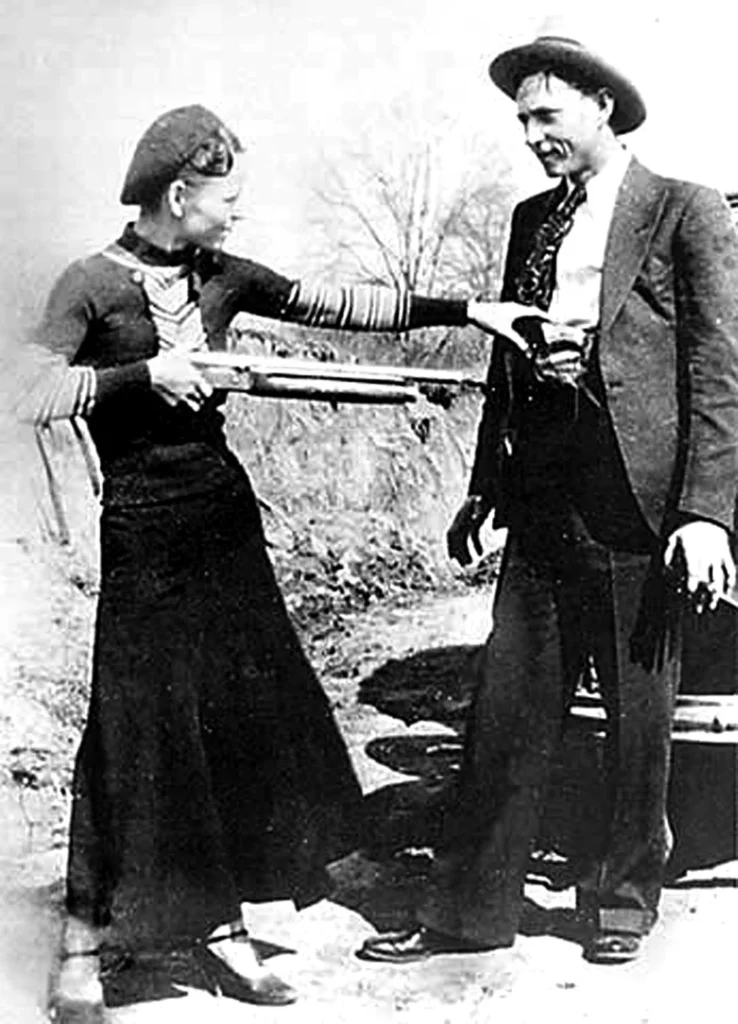
Clyde and Bonnie Parker were infamous for their string of robberies and murders across the Midwest.
They routinely stole Ford V8s for their speed and reliability.
The letter was unsolicited and handwritten—an odd kind of product endorsement from a fugitive.
Legacy:
The letter is preserved at The Henry Ford Museum.
Though some handwriting experts question its authenticity, it’s widely accepted as genuine or at least consistent with Barrow’s style.
It added to the mythos of the Ford V8 as both a symbol of American ingenuity and outlaw infamy.
So yes—Ford’s engineering brilliance inadvertently became a tool for one of the most notorious crime sprees in U.S. history.
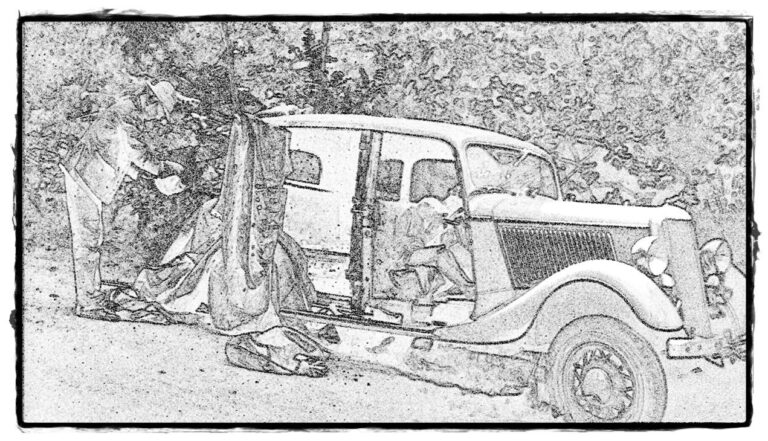
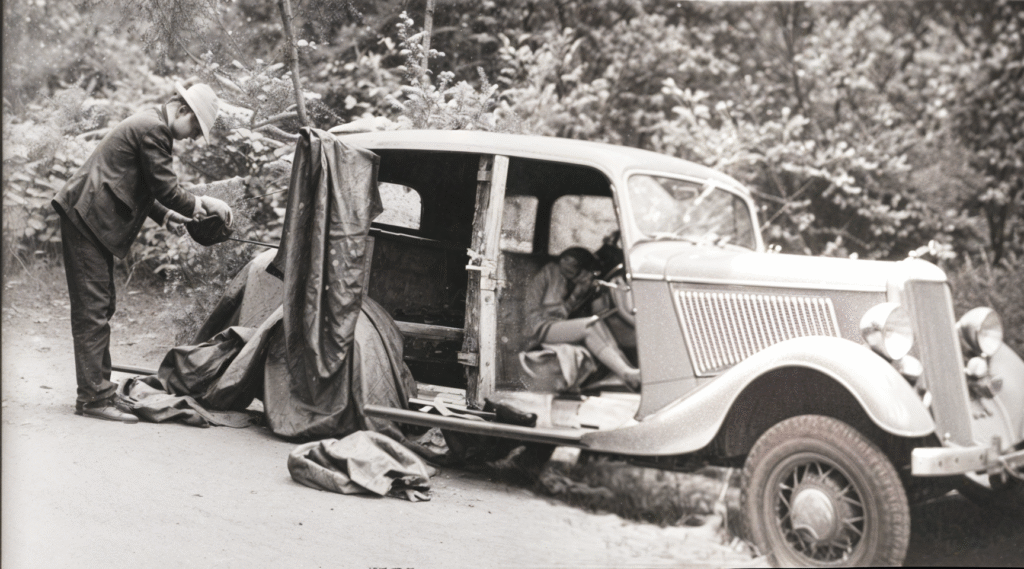
the Bonnie and Clyde “Death Car”, why it mattered, and how it became a macabre legend.
🚘 The Car: 1934 Ford Model 730 Deluxe Sedan
Color: Tan
Engine: Ford’s powerful Flathead V8
Why They Chose It:
It was faster than most police cars at the time.
The V8 engine gave them the edge in high-speed getaways.
It was stolen from a Kansas couple just weeks before their deaths.
🔫 The Ambush: May 23, 1934
Location: Bienville Parish, Louisiana
Event: A posse of six lawmen ambushed the car on a rural road.
Firepower: They unleashed 167 bullets, riddling the car with over 120 bullet holes3.
Outcome:
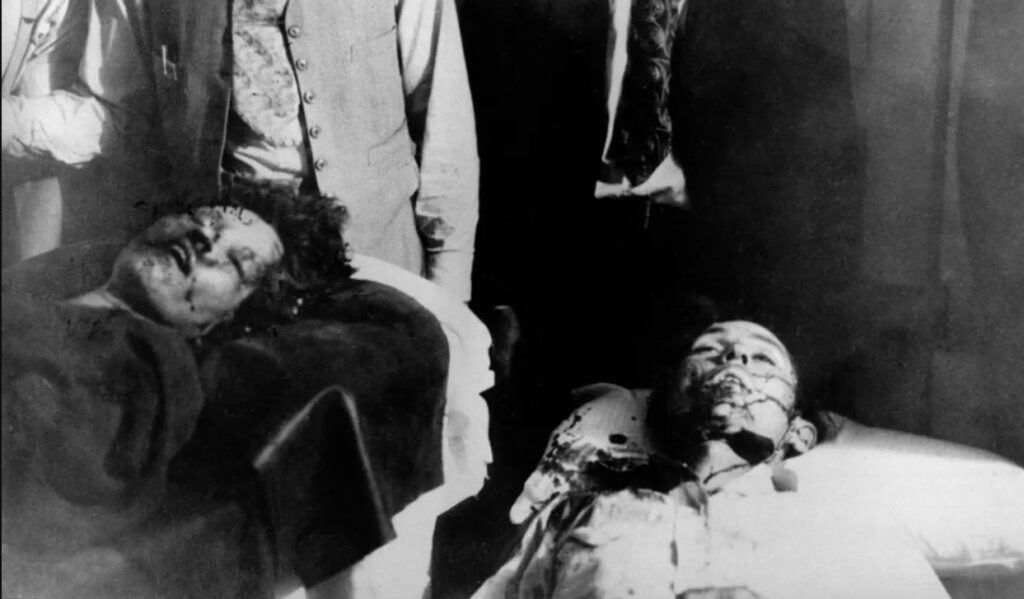
Clyde was killed instantly by a headshot.
Bonnie was hit multiple times—reportedly 26 wounds.
The car veered into a ditch and nearly overturned.
🧠 Why It’s Significant
Symbol of Rebellion: The car became a symbol of speed, defiance, and the outlaw mystique.
Cultural Impact:
Crowds swarmed the scene to see the bullet-riddled car.
Some people even tried to take shards of glass as souvenirs.
Touring Sideshow:
The car was returned to its original owner, Ruth Warren, who leased it out to tour the country.
It appeared at state fairs, amusement parks, and even racetracks where people paid to sit inside.
Current Location: Today, it’s on display at Whiskey Pete’s Casino in Primm, Nevada.
🕵️ The Legacy
This Ford V8 wasn’t just a getaway car—it became a gruesome celebrity. It represents the collision of innovation, crime, and media spectacle. And it’s a reminder of how even a stolen car can become a permanent part of American folklore.
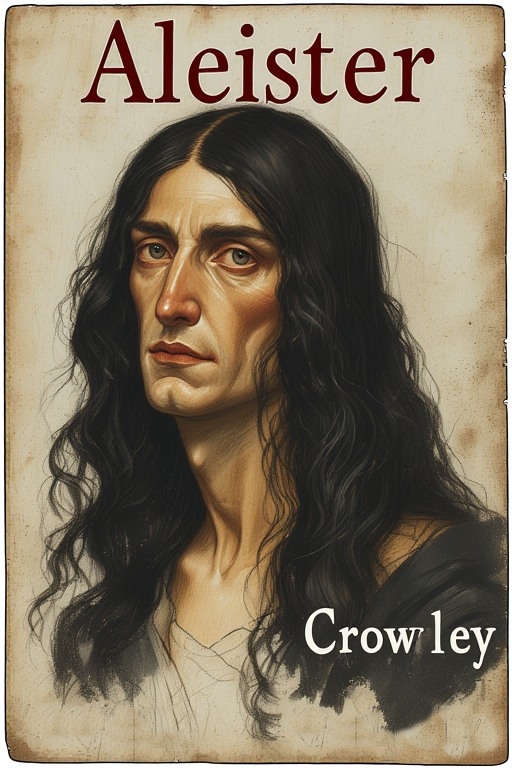
The rise of the horror genre provided a particularly fertile ground for Crowley’s influence to manifest. Films that explored themes of witchcraft, devil worship, and demonic possession often drew upon the popular imagery associated with figures like Crowley. While he may not have been explicitly named, the archetype of the charismatic, dangerous occultist, the master of dark arts, owes a significant debt to the media’s sensationalized portrayal of Crowley. #religion #Psychic #history #WendellSweet Psychic, Religion, history, Wendell Sweet