John Rourke is a private detective with contacts and a license to practice from New York to Arizona. He has the resources he needs across the country to find the information he needs to crack the toughest cases. Ex-cops, ex-Cons, snitches, stoolies, drug addicts, criminals, drug dealers and any kind of scum of the earth you can imagine or care to name. He knows the seedy side of life and to some people that makes him indispensable…
Book three:
The silence was broken by the distant screech of a hawk, its cry sharp and piercing against the vast silence of the desert. It was a lonely sound, a perfect metaphor for the state of my own soul. I was tired, bone-deep tired. Sleep was a luxury I couldn’t afford, nightmares a constant companion. The faces of the victims, the ones I’d found along Rieser’s trail, haunted my dreams. Each one a testament to the brutal efficiency of a man who knew how to erase his tracks… #BookWorm #Readers #KindleUnlimited #WWWatson #Crime #Noir #Mystery #PrivateEye
Private Investigations 2: A John Rourke detective Story (Private Investigations: John Rourke Private Detective Stories) Kindle Edition Book 2 of 3: Private Investigations: John Rourke Private Detective Storiesby W. W. Watson(Author)Format: Kindle Edition J Book 2 of 3: Private Investigations: John Rourke Private Detective Stories John Rourke is a private detective with contacts and a license to practice from New York to Arizona. He has the resources he needs across the country to find the information he needs to crack the toughest cases. Ex-cops, ex-Cons, snitches, stoolies, drug addicts, criminals, drug dealers and any kind of scum of the earth you can imagine or care to name. He knows the seedy side of life and to some people that makes him indispensable…
Book two:
My apartment, usually a sanctuary of quiet solitude, became a temporary forensic lab. The dining table transformed into a command center, littered with maps, photographs, financial records, and transcripts of intercepted phone calls. The air hung heavy with the scent of stale coffee and the lingering aroma of cheap takeout containers. Days bled into nights as I painstakingly organized the evidence, meticulously documenting every detail, creating a comprehensive narrative that would stand up to the scrutiny of the legal system… #BookWorm #Readers #KindleUnlimited #WWWatson #Crime #Noir #Mystery #PrivateEye
John Rourke is a private detective with contacts and a license to practice from New York to Arizona. He has the resources he needs across the country to find the information he needs to crack the toughest cases. Ex-cops, ex-Cons, snitches, stoolies, drug addicts, criminals, drug dealers and any kind of scum of the earth you can imagine or care to name. He knows the seedy side of life and to some people that makes him indispensable…
Book one:
The chipped paint on my beat-up Ford Falcon was flaking like old skin. The smell of stale coffee clung to the interior like a cheap perfume, a constant, bitter reminder of the long hours ahead. Across the street, Paul Fields’ two-story colonial loomed, a picture of suburban perfection, a stark contrast to the cramped discomfort of my temporary office. The relentless hum of traffic on Hemlock Drive was a dull, throbbing ache in my skull, a soundtrack to this tedious ballet of surveillance. My gut churned, not from the coffee, but from the gnawing feeling that I was hemorrhaging money, bleeding my retainer dry on this seemingly pointless stakeout…
For Billy Jingo, living in Glennville is a dead in life. His trailer home next to the county dump. His dead-end job. The boring life he lived. And then on Friday morning his whole world turned upside down. He suddenly found himself emerged in crime that was so far above his normal reasoning range that, at first, he couldn’t even comprehend the implications on it. In a heartbeat he found himself in a fight for his life. On the run with someone’s drugs and money and a girl he had not even known just a few hours before. Buckle up, enjoy the ride. Fast paced pulp style fiction… #Crime #Audio #Pulp #Readers #Listeners
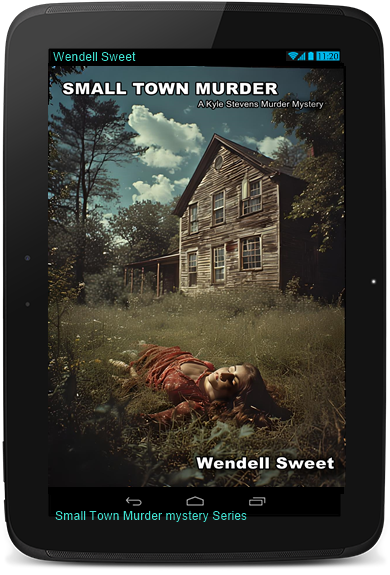
Small Town Murder: A Kyle Stevens Murder Mystery (Glennville Book 12) Kindle Edition
The Small town of Glennville New York is a nice quiet place to settle down and raise your family. At least that is What Sheriff Kyle Stevens thought when he retired after being a detective in New York City for twenty years. And Glennville, for the most part was quiet. Respectfull. Safe. Until the day Kyle’s deputy for the body of a young girl out by the old abandoned school building…
The Mexican is a crime story that follows a young man as he makes a fateful series of decisions that place him right square in the middle of an ongoing drug deal gone bad. Murder, betrayal, violence, hot women, guns, car chases and killers all thrown together for a fast ride through Mexico… #Mexico #dellsweet #audiostory #Free #crimestory The book is available from Amazon in Kindle Unlimited, Audiobook or Paperback: The Mexican – Kindle edition by Sweet, Dell. Literature & Fiction Kindle eBooks @ Amazon.com. https://youtu.be/0CGNCMkYg0g
The Crime Novel Genre: An Exploration of a Literary Staple
From the intricate puzzles of the “whodunnit” to the gritty realism of the hardboiled detective, the crime novel genre has captivated readers for centuries. Far more than simple tales of good versus evil, these books serve as a mirror to society, exploring themes of justice, morality, and the darker side of human nature. The genre’s appeal lies in its ability to simultaneously entertain and challenge us, inviting us to solve puzzles and confront uncomfortable truths. While the core elements—a crime, an investigation, and the pursuit of a perpetrator—remain constant, the crime novel has continuously evolved, branching into a diverse family of sub-genres that reflect the changing world around us.
The Foundations of a Genre
The modern crime novel as we know it emerged in the mid-19th century, fundamentally shaped by the work of Edgar Allan Poe. His 1841 short story, “The Murders in the Rue Morgue,” is widely considered the birth of detective fiction. It introduced the brilliant, eccentric sleuth, C. Auguste Dupin, who uses deductive reasoning to solve a seemingly unsolvable crime. This formula proved immensely popular and laid the groundwork for the most iconic figure in the genre: Sherlock Holmes. Created by Arthur Conan Doyle, Holmes and his loyal sidekick, Dr. Watson, became a global phenomenon, establishing the detective as a heroic figure of intellect and order.
This early period of crime fiction, often referred to as the “Golden Age,” was defined by British authors like Agatha Christie and Dorothy L. Sayers. Their novels were intellectual exercises, focusing on complex plots, a limited cast of suspects, and a final, grand revelation that tied all the clues together. The emphasis was on fair play—the reader was given all the same information as the detective and encouraged to solve the puzzle themselves. The crimes were often committed within closed, controlled environments like country estates or remote islands, a setting that allowed for intricate plotting and character-driven mystery.
The Shift to Sub-Genres
While the Golden Age dominated, a starkly different approach was brewing across the Atlantic. The hardboiled genre, born in the pages of American pulp magazines, offered a gritty and cynical contrast to its British counterpart. Authors like Dashiell Hammett and Raymond Chandler traded drawing-room mysteries for the mean streets of Los Angeles and San Francisco. Their protagonists, such as Sam Spade and Philip Marlowe, were flawed, morally ambiguous private investigators. They operated in a world of corruption, betrayal, and violence, where the lines between good and evil were blurred. The hardboiled style was defined by its terse, direct prose and its exploration of urban decay and social injustice, a reflection of the tumultuous era of the Great Depression and Prohibition.
From these two foundational pillars, a multitude of sub-genres emerged. Police procedurals focus on the realistic, day-to-day work of law enforcement. Instead of a single, brilliant amateur sleuth, these stories follow a team of detectives as they navigate bureaucracy, forensics, and the slow grind of an investigation. Authors like Ed McBain and Joseph Wambaugh brought a new level of authenticity to the genre, showing the human toll of police work.
The thriller shifted the genre’s focus from who did it to what happens next. The mystery is often less important than the suspense, the high stakes, and the relentless pace. In a thriller, the protagonist is usually a regular person thrust into an extraordinary and dangerous situation, often in a race against time to stop a larger catastrophe. Authors like Tom Clancy and Michael Crichton popularized the techno-thriller, while others, like Robert Ludlum, perfected the spy thriller.
The psychological thriller, popularized by authors such as Patricia Highsmith and Daphne du Maurier, delves into the minds of its characters. It focuses less on the external plot and more on the internal turmoil, the paranoia, and the often unreliable narrator. These stories are built on psychological tension and emotional manipulation, keeping the reader on edge as they question what is real and what is just a figment of a disturbed mind.
The Enduring Appeal and Modern Evolution
So why does the crime novel continue to resonate with us? At its core, it offers a sense of control over chaos. A crime shatters order, and the detective’s role is to restore it. This narrative arc, from disruption to resolution, is deeply satisfying. The intellectual puzzle of the mystery and the adrenaline rush of the thriller provide a form of escapism, allowing us to confront our fears from a safe distance. Moreover, the genre’s moral landscape, especially in its modern form, allows for a nuanced exploration of complex issues.
Today’s crime novel has expanded to encompass a vast array of topics. Authors blend elements of classic detective fiction with contemporary social commentary. The modern crime novel can be a vehicle for exploring themes of racial injustice, political corruption, environmental crime, and the implications of new technologies. Authors like Dennis Lehane and Tana French are celebrated for their ability to write crime novels that are also profound works of literary fiction, with complex characters and a deep understanding of place. Their stories demonstrate that a crime novel can be both a gripping page-turner and a thoughtful reflection on the human condition.
The crime novel genre has proven to be incredibly adaptable and resilient. From its methodical beginnings to its modern-day psychological and social complexity, it continues to evolve. It’s a genre that thrives on a simple yet powerful premise: something is wrong, and someone has to figure out why. This fundamental human drive—to seek truth, to find justice, and to understand the darkness within and around us—ensures that the crime novel will remain a vital and popular literary staple for generations to come.
The city breathed with a rhythm all its own, a symphony of sounds and smells that were as much a part of Vinnie LaRosa as his own heartbeat. Little Italy, mid-20th century, was a vibrant, chaotic organism, its narrow streets a pulsing artery crammed with life. From the cramped tenements that clawed at the sky, their fire escapes a tangled lace against the brick, to the bustling trattorias that spilled the rich, intoxicating aroma of simmering tomato sauces and roasted garlic onto the cobblestones, the neighborhood was a constant, humming presence. Laundry flapped like colorful prayer flags from windows, a cacophony of Italian dialects spilled from doorways, and the ever-present rumble of streetcars added a bass note to the urban opera. #Crime #Fiction #Amazon #KU #Kindle #WGSweet #Mafia #Organizedcrime
The city sprawled beneath him, a glittering tapestry woven with threads of ambition and illuminated by a million indifferent stars. From the aerie of his penthouse, high above the cacophony of the streets, Vinny LaRosa surveyed his kingdom. It wasn’t a kingdom of stone and mortar, but of shadow and influence, a sprawling, illicit empire that pulsed with a life of its own. The lights weren’t just streetlamps and neon signs; they were signals, markers of territories controlled, deals brokered, and lives manipulated. Each flicker was a testament to his reach, a silent acknowledgment of the power he wielded. This was the zenith, the apex of his ascent, a plateau of opulence built on a foundation of calculated ruthlessness and an almost supernatural understanding of the human appetite for both order and chaos. #Crime #Fiction #Amazon #KU #Kindle #WGSweet #Mafia #Organizedcrime
EASY CRIME SERIES
Easy Crime 01 Kindle Edition
Book 1 of 4: Easy Crime
Then I saw him. Robby.
He hadn’t changed much. Still the same lean build, the same unsettlingly calm demeanor that had always made me both wary and fascinated. His eyes, though, held a sharper glint, a honed edge that spoke of survival in a world even harsher than the one behind bars. He was a predator, disguised in the sheep’s clothing of a casual acquaintance, and the way he sat at the bar, radiating an aura of dangerous nonchalance, sent a chill down my spine… #Crime #Fiction #KU #Readers #Thriller #Kindle #Audible https://www.amazon.com/dp/B0FNFVBNTF
Easy Crime 02 Kindle Edition
Book 2 of 4: Easy Crime
The air hung thick and heavy, a humid blanket clinging to the skin even in the pre-dawn chill. The city, normally a cacophony of distant sirens and rumbling traffic, was unusually quiet, punctuated only by the rhythmic tremor that vibrated through the very foundations of the buildings… #Crime #Fiction #KU #Readers #Thriller #Kindle #Audible #Series https://www.amazon.com/gp/product/B0FND96CM1
Easy Crime 03 Kindle Edition
Book 3 of 4: Easy Crime
Marva took a slow sip of her drink, her expression unreadable. “Midnight’s risky, Robbie. The place is usually crawling with people that late.” Her voice was flat, devoid of any emotion, a stark reflection of her hardened exterior. Years spent surviving in the unforgiving landscape of the city’s underbelly had honed her survival instincts, turning her into a creature of stark pragmatism. She had seen too much death, too much violence, to afford herself the luxury of fear or sentimentality. #Crime #Fiction #KU #Readers #Thriller #Kindle #Audible #Series https://www.amazon.com/gp/product/B0FN8KT8PM
Easy Crime 04 Kindle Edition
Book 4 of 4: Easy Crime
Jenna clutched the strap of her worn messenger bag, her knuckles white. Her gaze was fixed on the two figures illuminated by the erratic neon. One was a burly man, his face obscured by the deep shadow cast by a baseball cap pulled low, his frame hunched as if carrying the weight of the world, or perhaps just the heavy duffel bag clutched between his hands. #Crime #Fiction #KU #Readers #Thriller #Kindle #Audible #Series https://www.amazon.com/dp/B0FNNHYSFF
Gus Dyer: The Jimmy West Case
Gus Dyer is a hardcore detective in the big city. He knows what crime is, and he has seen the worst of the worst walk her streets and taken those same people down. Some to jail, some to the gates of hell where they belonged in the first place.
This time he is on the trail of a hired killer, Jimmy West. West works out of the city. It is his base and fortress, the place where he can roam free among millions of other people unseen, unchallenged and free to continue his crimes. #crime #thriller #mystery #amazon #ku
Gus Dyer: The road to redemption
Gus Dyer is a detective no more. Staring into the deep wells of corruption for too many years sent him into a spiral. He tried to use the bottle to find his way out, but that only dragged him in deeper. The road to Redemption is a look at that fall and how hard that fall was. But Gus is determined to stand on his own two feet again. It remains to be seen whether he will ever become a detective again, but he is finding out that being a detective is not about a badge. It isn’t something you take on with the position either. It is in your blood, and if you have it, you cannot help but follow those impulses that flood through your body with that blood when you know something is wrong. Dead wrong… #crime #thriller #mystery #amazon #ku
Breakout
The Trap
The air hung thick and heavy, a miasma of stale cigarette smoke, cheap weed, and something else… something indefinably rotten. It clung to the peeling wallpaper, to the stained mattress shoved against the wall, to the very fabric of the room itself. This wasn’t just a dilapidated apartment in Harlem; it was a tomb, a suffocating cage built from neglect and despair. Rose-Lee, her eyes sharp and assessing, took it all in, the grime, the shadows, the sense of impending doom that settled like a shroud. Across the room, Alice huddled beneath a threadbare blanket, her eyes wide and fearful, a stark contrast to Rose-Lee’s steely gaze… #Crime #Thriller #Psychological #Readers #Urban
The Streets By Wendell Sweet One evening, I found myself back at the scene of the car accident—the snow-covered road where my life nearly ended. The scars on my body served as tangible reminders of that brutal night; the emotional scars were far deeper. The silence was deafening, broken only by the occasional rustle of the wind. The cold night air, the harsh sounds of snow crunching under my boots; it all was reminiscent of the night that would nearly cost my life. Standing there, I felt a wave of sadness, a flicker of the old fear, but it quickly subsided. The trauma was still there, woven into the fabric of my being, but it no longer controlled me. I had faced it, processed it, and emerged stronger.#True #NonFiction #Crime #Memoir #Kindle #KU Kindle: