A 1968 Charger model I built, photographed and then used AI to bring to life… #charger #dodge #3dmodel #AIA 1968 Charger model I built, photographed and then used AI to bring to life… #charger #dodge #3dmodel #ai https://youtu.be/CsjFyLw-k0U
Fire The ancient clan in prehistoric Europe, 85,000 years ago, faced a devastating attack that forced them out of their high stone shelter. With many losses, particularly among the young and elderly, they realized the crucial role fire played in their survival. The strongest members of the clan took charge and decided to send out hunters to retrieve fire from a new source, while the rest of the clan remained behind, anxiously awaiting the return of their life-sustaining flame… #Readers #Prehistoric #Paleolithic #Booklovers #Bookworms #Archaic #Neanderthal #denisovans #Cro-Magnon
He hadn’t changed much. Still the same lean build, the same unsettlingly calm demeanor that had always made me both wary and fascinated. His eyes, though, held a sharper glint, a honed edge that spoke of survival in a world even harsher than the one behind bars. He was a predator, disguised in the sheep’s clothing of a casual acquaintance, and the way he sat at the bar, radiating an aura of dangerous nonchalance, sent a chill down my spine… #Crime #Fiction #KU #Readers #Thriller #Kindle #Audible
Easy Crime 02 Kindle Edition
Book 2 of 4: Easy Crime
The air hung thick and heavy, a humid blanket clinging to the skin even in the pre-dawn chill. The city, normally a cacophony of distant sirens and rumbling traffic, was unusually quiet, punctuated only by the rhythmic tremor that vibrated through the very foundations of the buildings… #Crime #Fiction #KU #Readers #Thriller #Kindle #Audible #Series
Easy Crime 03 Kindle Edition
Book 3 of 4: Easy Crime
Marva took a slow sip of her drink, her expression unreadable. “Midnight’s risky, Robbie. The place is usually crawling with people that late.” Her voice was flat, devoid of any emotion, a stark reflection of her hardened exterior. Years spent surviving in the unforgiving landscape of the city’s underbelly had honed her survival instincts, turning her into a creature of stark pragmatism. She had seen too much death, too much violence, to afford herself the luxury of fear or sentimentality. #Crime #Fiction #KU #Readers #Thriller #Kindle #Audible #Series
Easy Crime 04 Kindle Edition
Book 4 of 4: Easy Crime
Jenna clutched the strap of her worn messenger bag, her knuckles white. Her gaze was fixed on the two figures illuminated by the erratic neon. One was a burly man, his face obscured by the deep shadow cast by a baseball cap pulled low, his frame hunched as if carrying the weight of the world, or perhaps just the heavy duffel bag clutched between his hands. #Crime #Fiction #KU #Readers #Thriller #Kindle #Audible #Series
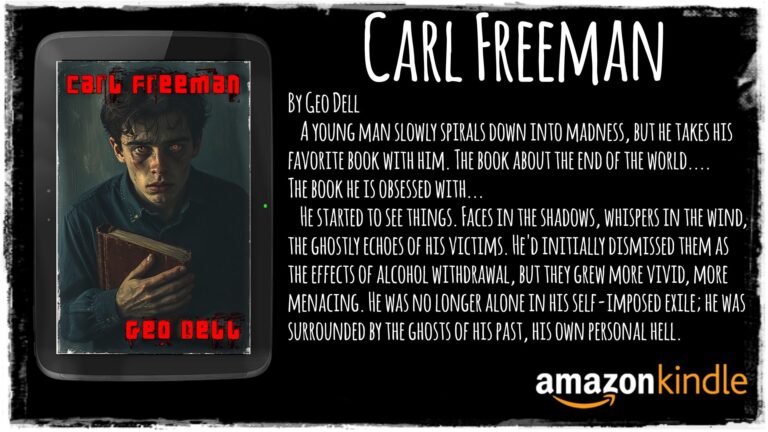
A young man slowly spirals down into madness, but he takes his favorite book with him. The book about the end of the world…. The book he is obsessed with… He started to see things. Faces in the shadows, whispers in the wind, the ghostly echoes of his victims. He’d initially dismissed them as the effects of alcohol withdrawal, but they grew more vivid, more menacing. He was no longer alone in his self-imposed exile; he was surrounded by the ghosts of his past, his own personal hell. #Horror #Readers #Amazon #Kindle #KU #Thriller
https://www.amazon.com/dp/B0G2HS9B6N?binding=kindle_edition&ref=dbs_dp_rwt_sb_pc_tkin #dystopian #apocalyptic #survival #endtimes #amazonfinds #kindle #KindleUnlimited The hot, new, dystopian trilogy that will keep you in suspense. The East Coast Protection Directive was issued for the New York City Police department to take care of the people on the East Coast when the world begin to fall apart. They took that oath to heart…
n the late twenty first century the world went to hell and a true apocalypse began. Not the dead rising, not world war three, just a break down of the entire economic system until everything, everywhere was broken. In New York the East Coast Protection Directive was issued making the East Coast of America the responsibility of the former NYPD. The idea was to be that last bastion of protection. The last hope of normalcy. The goal was to do whatever was in their powers to protect New York and the main part of the East Coast from the gangs and the strong men who were taking over… But then the Vipers Kidnapped Alex’s woman, Maya and all hell broke loose on the East Coast and Alex was out for blood… East Coast Protection Directive: Vendetta Kindle Edition by Wendell Sweet (Author) Format: Kindle Edition Book 3 of 3: East Coast Protection Directive See all formats and editions The hum of the generators was a low, persistent thrum, a mechanical heartbeat in the corpse of a city. It was the only constant in a world that had forgotten what constancy meant. Decades had bled into one another since the Republic had finally, irrevocably, exhaled its last breath. Not with a bang, but a whimper of collapsing infrastructure, a cacophony of failed promises, and the gnawing silence where federal authority once stood. Now, the United States was a mosaic of fractured territories, each a sovereign kingdom ruled by iron fists and desperation. #Dystopian #ApocalypticFiction #PostApocalyptic #Survival #ECPD #Series #Dystopian
East Coast Protection Directive: This is the directive issued by the New York State government just after the world went to hell and the true apocalypse began. The former NYPD police department became the East Coast Protection Directive officers. Their job: To keep citizens safe: That was before things grew worse and there wasn’t much left to protect. Maya: The Mechanic and eventually an officer in her own right. And Alex an NYPD officer work to other to keep what is left of the dying republic alive…
Book Two: Into the Abyss. Audible – Paperback – Kindle and Kindle Unlimited East Coast Protection Directive: Into The Abyss Kindle Edition by Wendell Sweet (Author) Format: Kindle Edition The world, as Alex Chen knew it, had fractured beyond repair. The year was a ghost, a relic of a time when governments held sway and infrastructure meant more than shattered concrete and rusted rebar. America was no longer a nation, but a patchwork quilt of territories, each a desperate scramble for survival. In this mosaic of decay, the East Coast Police Department, or ECPD, stood as a thin, fraying shield. Their jurisdiction, a meager few hundred miles of crumbling asphalt and scattered, desperate outposts, felt less like a territory and more like a last stand. #Dystopian #ApocalypticFiction #PostApocalyptic #Survival #ECPD #Series #Dystopian
This is the first book in the trilogy. Alex Chen, a NYPD officer finds himself in command of the failing NYPD when the directive comes down. The NYPD is the last hope for the East Coast of America. They have been charged with the task to protect the East Coast of America for as long as they can with everything they have. Alex and the men and women he works with take on this task in the beginning of a worldwide apocalypse. Forsaking their own needs to protect the last remnants of America…
East Coast Protection Directive: Fractured Horizon by Wendell Sweet (Author) Format: Kindle Edition Maya Ramos, a miracle worker with grease-stained hands and eyes that saw the soul of an engine, kept these metal titans breathing, her workshop a sanctuary of organized chaos in the surrounding desolation. Alex Chen, a man who had once patrolled the gleaming, albeit corrupt, streets of NYPD, now navigated this shattered world with a heavy heart and an even heavier conscience. The rot he’d fought in the old world had merely spread, festering into a continent-wide plague of desperation. The landscape itself was a testament to the world’s unraveling. Once vibrant shores were now choked with plastic debris and the skeletal remains of ships, their hulls like beached leviathans. Inland, the arteries of commerce, the highways and byways, had become no-man’s-lands. They were arteries of peril, patrolled by opportunistic raiders and desperate scavengers. The air, thick with the perpetual haze of unchecked industry and the lingering dust of forgotten cataclysms, offered little respite. Each breath was a gamble, a taste of the world’s slow, suffocating demise. Resources were a constant source of conflict. Fuel was hoarded, water purified with desperate ingenuity, and food, when found, was a treasure to be defended with one’s life. Every settlement was a fortress, every journey a potential battlefield. #Dystopian #ApocalypticFiction #PostApocalyptic #Survival #ECPD #Series #Dystopian
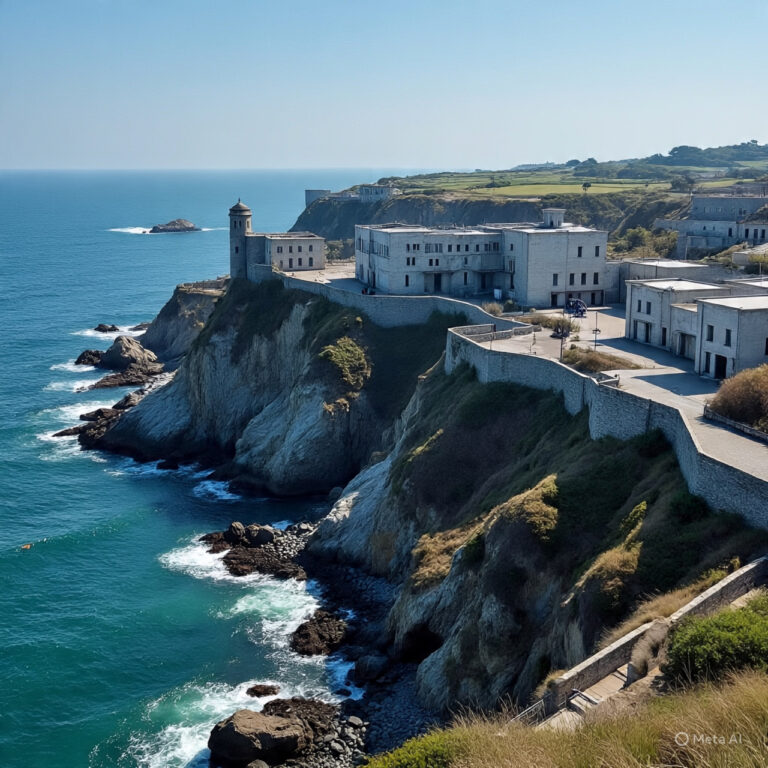
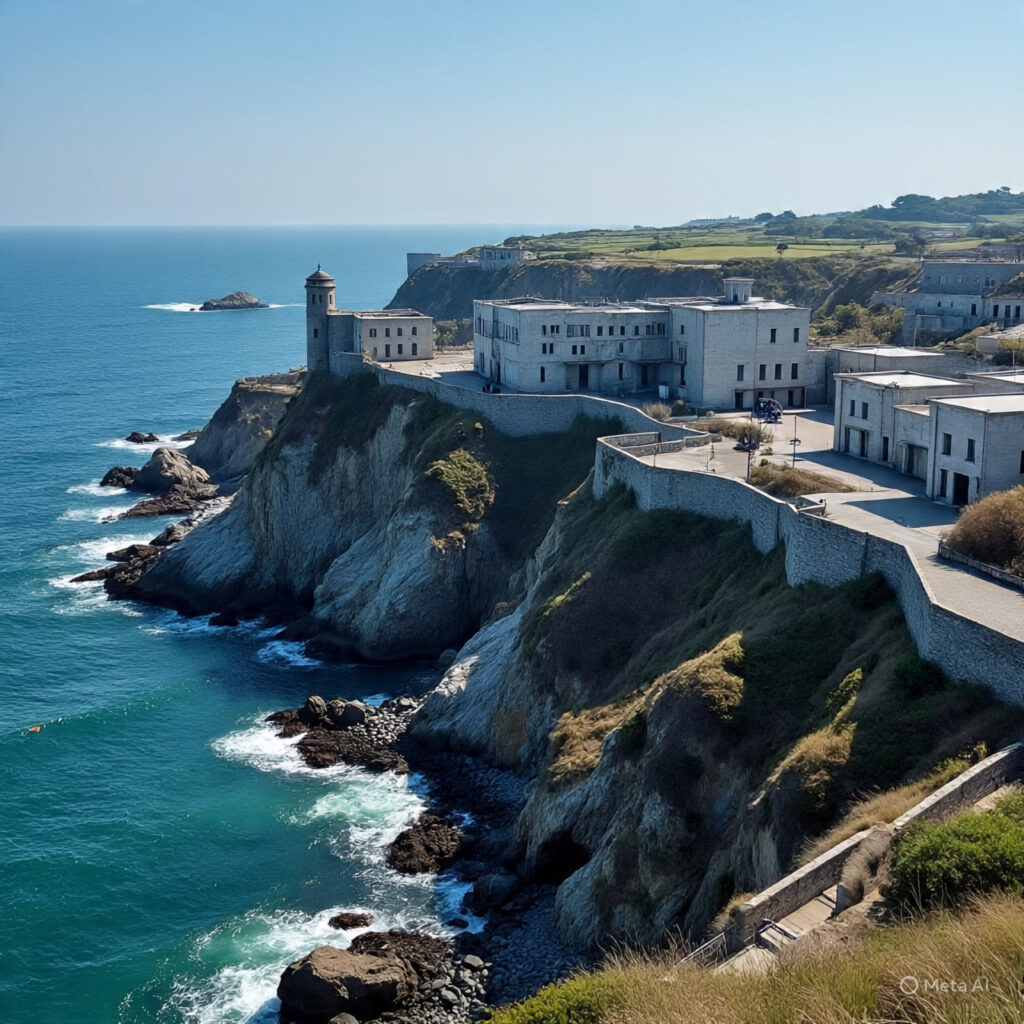
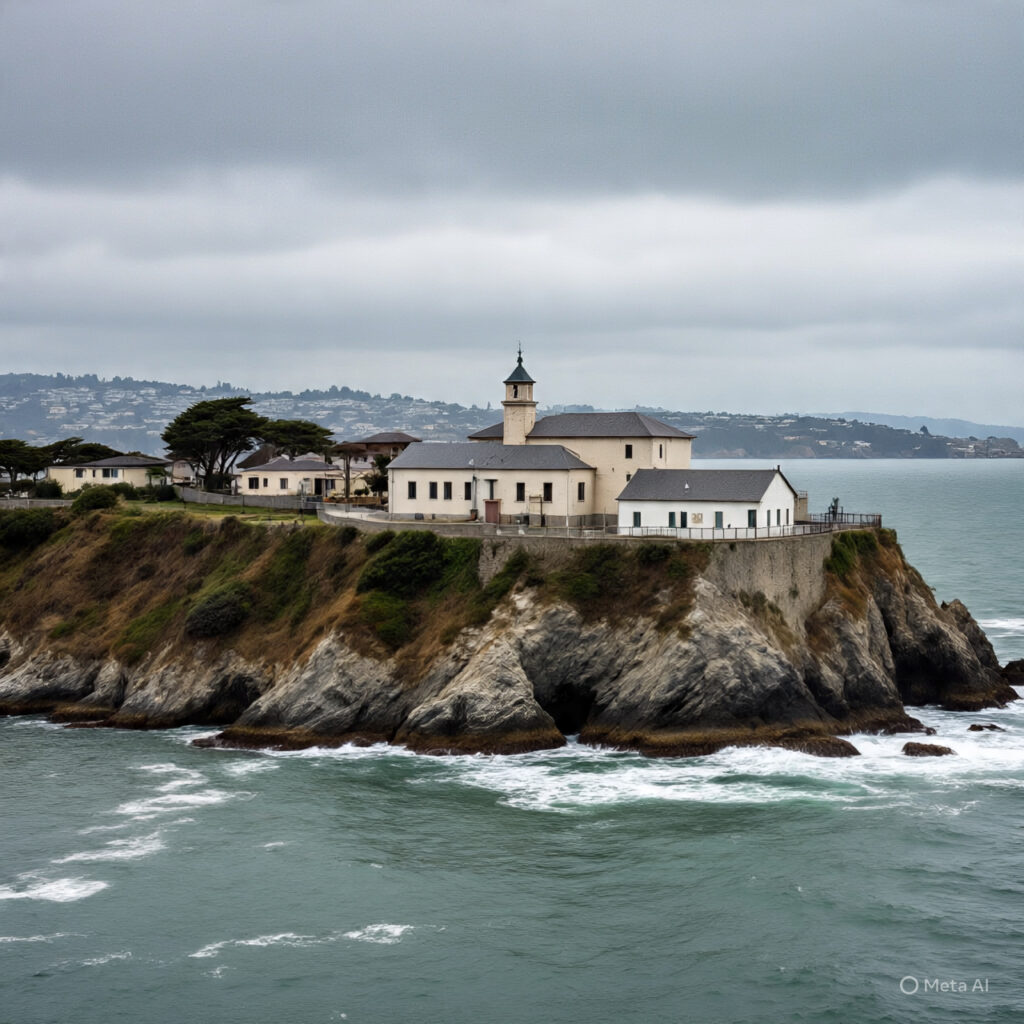
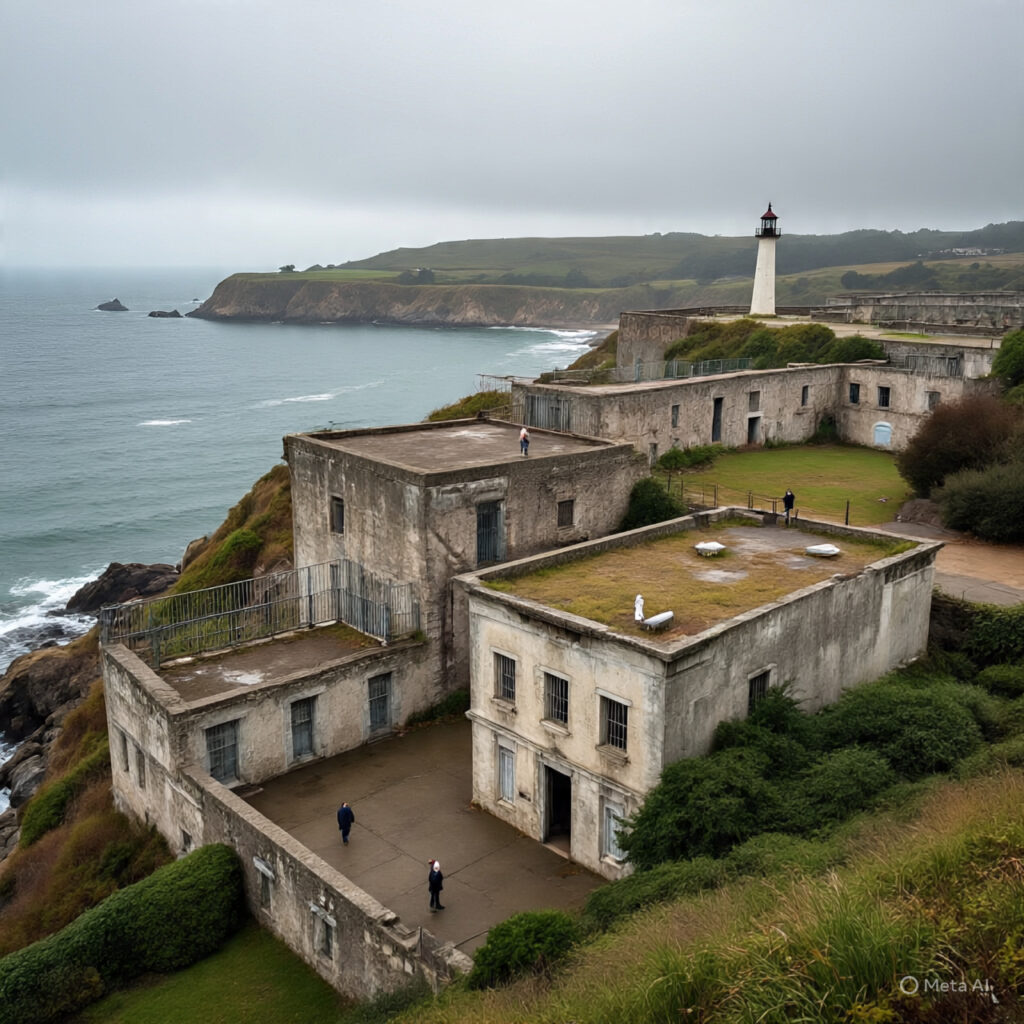
Alcatraz Island, colloquially known as “The Rock,” is a small island located in the San Francisco Bay, California. From 1934 to 1963, it served as a maximum-security federal prison, housing some of America’s most notorious criminals. The prison’s isolated location, surrounded by cold and treacherous waters, made escape attempts extremely difficult, earning it a reputation as an escape-proof facility.
History of Alcatraz Before its conversion into a prison, Alcatraz Island had various roles. In 1847, it was used as a U.S. Army fortress to protect the San Francisco Bay from potential naval attacks. Later, in 1909, the army demolished the fortress and began constructing a military prison, which would eventually become the foundation for the federal penitentiary.
The Federal Bureau of Prisons took over Alcatraz in 1933 and, under the direction of Sanford Bates, transformed the island into a maximum-security prison. On August 11, 1934, the United States Penitentiary, Alcatraz Island, officially opened its doors to its first batch of inmates. Over the years, Alcatraz would house a total of 1,547 inmates, with an average population of 260 prisoners at any given time.
Life on Alcatraz Life on Alcatraz was harsh and unforgiving. Inmates were subjected to strict rules and regulations, with even minor infractions punished severely. Prisoners woke up at 6:30 am for breakfast, followed by a roll call and assignment to work details. Jobs included maintenance, laundry, and industries such as weaving and woodworking.
Inmates were allowed limited privileges, including reading materials, playing musical instruments, and writing letters. However, these privileges could be revoked at any time for misbehavior. Solitary confinement, known as “the hole,” was a common punishment for rule-breakers. Inmates in solitary confinement were denied privileges, and sometimes even basic necessities like food and clothing.
Notorious Inmates Alcatraz was home to many infamous prisoners, including:
Al Capone: The notorious gangster and bootlegger was sentenced to 11 years in prison for tax evasion. He spent four and a half years on Alcatraz before being transferred to a federal prison in Illinois due to declining health.
George “Machine Gun” Kelly: A notorious bank robber and kidnapper, Kelly was a key figure in the FBI’s early years. He spent 17 years on Alcatraz before being transferred to Leavenworth Federal Penitentiary.
Robert Stroud: Known as the “Birdman of Alcatraz,” Stroud was a convicted murderer who spent 54 years in prison, 17 of which were on Alcatraz. While in prison, Stroud became an ornithologist, writing a book on bird diseases.
Escape Attempts Despite its reputation as an escape-proof prison, there were several attempts to flee Alcatraz. The most famous attempt was made by Frank Morris and the Anglin brothers, John and Clarence, in June 1962. The trio used crude homemade tools to dig through their cell walls and created papier-mâché heads and realistic faces to fool the guards during the night’s headcount.
The three inmates climbed to the roof of their cells and made their way to the northern edge of the prison, where they had prepared a makeshift raft. They climbed over the prison’s perimeter fence and disappeared into the night. Despite an extensive search by the FBI, the bodies of Morris and the Anglin brothers were never found, leaving behind speculation about their fate.
Closure and Legacy After 29 years of operation, Alcatraz Prison closed its doors on March 21, 1963. The high operating costs, combined with the deterioration of the prison’s infrastructure, made it unsustainable. Attorney General Robert F. Kennedy and the Federal Bureau of Prisons decided to shut down the facility.
Today, Alcatraz Island is a popular tourist destination, operated by the National Park Service. Visitors can take a ferry to the island and explore the prison, learning about its history and infamous inmates. Alcatraz has become a symbol of the harsh realities of prison life and the enduring allure of the notorious crimes and criminals that once called it home.
The island’s history and legacy continue to captivate people worldwide, inspiring numerous books, films, and documentaries. Alcatraz Island stands as a testament to the complexities of the American justice system and the intriguing stories of those who lived and breathed within its walls.
Native American Occupation In 1969, a group of Native American activists occupied Alcatraz Island, citing an 1868 treaty that allowed Native Americans to claim unused federal land. The occupation, which lasted for 19 months, brought attention to Native American rights and the struggles faced by indigenous communities.
During the occupation, the activists offered the federal government $24 in glass beads and red cloth for the island, mirroring the sale of Manhattan. They envisioned Alcatraz as a cultural and educational center, highlighting the importance of Native American heritage.
The occupation ended in June 1971, when federal authorities forcibly removed the remaining activists. However, the movement had a lasting impact, raising awareness about Native American issues and contributing to the passage of the Indian Self-Determination and Education Assistance Act in 1975.
Alcatraz Today Alcatraz Island has become an iconic symbol of both the harsh realities of prison life and the struggles of Native American communities. The island’s rich history is preserved through the efforts of the National Park Service, which offers guided tours and educational programs.
Visitors to Alcatraz can explore the prison cells, listen to audio tours featuring former inmates and guards, and learn about the island’s Native American occupation. The island’s stark beauty, surrounded by the San Francisco Bay, serves as a poignant reminder of the complex stories and histories that have shaped America.
In recent years, Alcatraz has also become a focal point for discussions about mass incarceration, prison reform, and the treatment of inmates. The island’s history serves as a catalyst for conversations about the American justice system and the ongoing struggles faced by marginalized communities.
As a cultural and historical landmark, Alcatraz Island continues to captivate audiences worldwide, offering a glimpse into the lives of those who lived and breathed within its walls. Its legacy serves as a reminder of the power of human resilience and the enduring impact of America’s complex history.
The stories of Alcatraz’s past, from its notorious inmates to the Native American occupation, remind us of the island’s significance as a symbol of both oppression and resistance. As we reflect on the island’s history, we are reminded of the importance of understanding and learning from the past, as we strive to build a more just and equitable future.
In the words of a former Alcatraz inmate, “Alcatraz was a place where time stood still. It was a place where the world outside didn’t matter, and all that mattered was survival.” Today, Alcatraz Island stands as a testament to the human spirit, a reminder of the struggles and triumphs that have shaped America, and a poignant symbol of the ongoing quest for justice and humanity.
Here are some crime books you may like to read if crime is right up your alley…
Connected: Short Hauls Kindle Edition
Book 1 of 3: Connected
A collection of seven crime stories; including Harrows… They had been drinking one night when Robby had come out with the murder bit. #ShortStories #CrimeFiction #Watson #Readerrs #Kindle
Connected: Sanger Road Kindle Edition
Book 2 of 3: Connected
Sanger Road… Pulled from his mundane life, Carl finds a world where anything is possible if you are willing to risk everything… #Crime #Readers #Amazon #Kindle #BookLovers
Connected: Dello Green Kindle Edition
Book 3 of 3: Connected
Jimmy West backed his big Dodge around to an open dumpster container, late afternoon was a perfect time to dump a body… #CrimeFiction #CrimeJunkkies #CrimeReaders #Kindle #Amazon
Skull Island Bound: The Journal of a ships Boy In the heart of the vast and shimmering Pacific Ocean, three young ship boys, each no more than a few years past their childhood, found themselves cast away on a breathtakingly beautiful tropical island. This was no ordinary place; it was a lush paradise adorned with vibrant flora and fauna, where the warm sun kissed the golden sands and the gentle waves whispered secrets of the sea. Yet, beneath this idyllic exterior lay the harsh reality of survival in the 17th century, a time when the world was still largely unexplored and filled with both wonder and danger. #HistoricalFiction #SeaAdventure #DellSweet #KU #Kindle #Readers #BookLovers #Paperback
By Dell Sweet The Nation series follows a group of survivors as they navigate the changed reality of the apocalypse, where the living are as likely to kill you as the dead are. From Los Angeles to New York and all points in between the survivors come together and begin to live again… #Dystopian #ApocalypticFiction #Readers #DellSweet #EarthsSurvivors Smashwords – The Nation
I wrote a trilogy of books called the East Coast Protection Directive and each in the three subtitled. In making small AI ads for them one turned into a picture of a car that I really liked and so I ended up building that car as a 3D model in Direct X and then adding it to RAD and driving it…
This is the image that the AI generated. I liked the look of it and so I began to work on something like it. I didn’t do the dual rear end, of course, but I liked the body so, I refined it a little and then built the model.
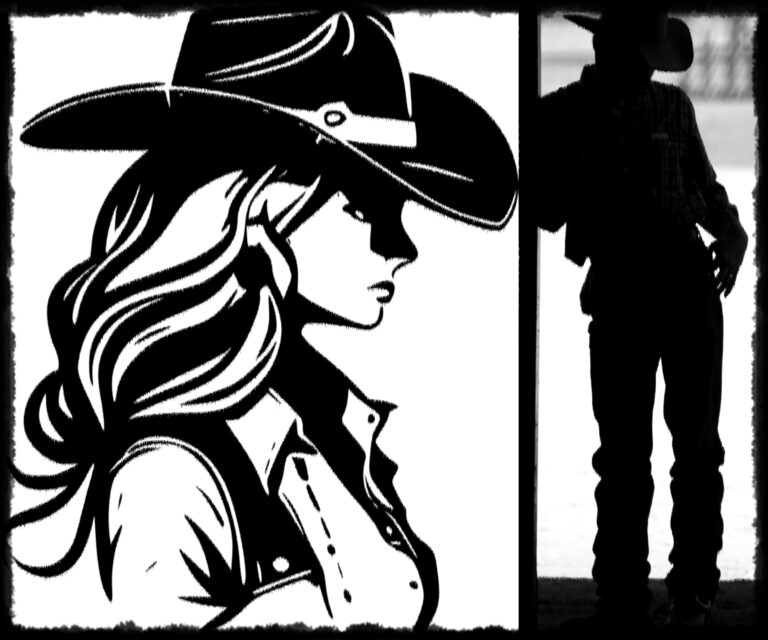
The Old West is a collection of five western themed stories set in the old west. Come along for an authentic trip through the west, the way it really was.
Jimson Jones, Sarah Johnson, The Cowboy, The Farmers Wife, To Hang a Thief
An excerpt from: Sarah Jones
One starless night, the tranquility of Harmony Creek was irrevocably broken. The rhythmic chirping of crickets was replaced by the terrifying sounds of shattering glass and panicked screams. A nightmare descended upon the peaceful farm. The familiar comfort of home was replaced by a brutal violence, a darkness that would sear itself into Sarah’s memory forever.