The hum of the generators was a low, persistent thrum, a mechanical heartbeat in the corpse of a city. It was the only constant in a world that had forgotten what constancy meant. Decades had bled into one another since the Republic had finally, irrevocably, exhaled its last breath. Not with a bang, but a whimper of collapsing infrastructure, a cacophony of failed promises, and the gnawing silence where federal authority once stood. Now, the United States was a mosaic of fractured territories, each a sovereign kingdom ruled by iron fists and desperation. #Dystopian #ApocalypticFiction #PostApocalyptic #Survival #ECPD #Series #Dystopian
World War II was a global conflict that lasted from 1939 to 1945. Here’s a brief rundown:
Causes and Start: The war began on September 1, 1939, when Nazi Germany, led by Adolf Hitler, invaded Poland. This prompted the United Kingdom and France to declare war on Germany, honoring their guarantees to Poland. Germany’s aggressive expansion, including the annexation of Austria and Czechoslovakia, and the signing of the Molotov-Ribbentrop Pact with the Soviet Union, set the stage for the war.
Main Countries Involved:
Axis Powers: Germany, Italy, Japan, and their allies
Allied Powers: UK, France, Soviet Union, United States, China, and their allies
Why Countries Were Involved:
Germany sought to expand its territory, resources, and dominance in Europe.
Italy and Japan wanted to expand their empires and secure resources.
The UK and France aimed to prevent German aggression and maintain their colonial empires.
The Soviet Union initially collaborated with Germany but later joined the Allies after being invaded.
The US entered the war after Japan’s attack on Pearl Harbor, seeking to protect its interests and security.
Duration: The war lasted six years, from 1939 to 1945, ending with Japan’s surrender on August 15, 1945.
American Casualties: The US suffered approximately 418,500 military deaths, with over 650,000 wounded.
End of the War: The Allies accepted Germany’s surrender on May 8, 1945 (V-E Day). The US dropped atomic bombs on Hiroshima and Nagasaki, leading to Japan’s surrender on August 15, 1945 (V-J Day).
Operation Fortitude: You’re likely referring to Operation Fortitude, a successful Allied deception plan that misled Germany about the D-Day invasion site. The Allies created a fake army, with fake equipment and radio transmissions, to convince Germany that the invasion would occur at Pas-de-Calais, rather than Normandy. This helped secure the success of the D-Day invasion.
World War II had a profound impact on the global economy, leading to:
Massive Destruction: Widespread devastation of infrastructure, industries, and human capital in Europe and Asia.
Shift in Global Power: The US emerged as a dominant economic power, while the UK’s economy was severely weakened.
Bretton Woods System: The 1944 conference established the US dollar as a global reserve currency, shaping international trade and finance.
Global Debt: Countries accumulated significant debt, leading to post-war economic challenges.
Industrial Growth: The war drove innovation, accelerating technological advancements and industrial production in the US.
New Global Order: The war laid the groundwork for the Cold War and the formation of international organizations like the United Nations.
The war’s economic impact was felt for decades, shaping global trade, politics, and economies.
Post-WWWII economic challenges included:
Reconstruction: Rebuilding devastated economies, infrastructure, and industries in Europe and Asia.
Inflation: Managing inflation, which rose due to wartime spending and shortages.
Unemployment: Transitioning from war-time to peacetime economies, leading to job shifts.
Debt: Managing massive government debt accumulated during the war.
Trade: Re-establishing international trade disrupted by the war.
Conversion: Shifting industries from war production to consumer goods.
The US faced challenges like demobilization and labor strikes, while Europe faced food shortages and economic instability. The Marshall Plan (1948) helped stimulate European recovery.
The Nation Collection contains the first four books in one volume. Follow the survivors as they struggle to survive in a vastly changed world, where the living are just as likely to kill you as the dead are. They navigated a maze of shattered streets, the buildings looming over them like skeletal giants. The air vibrated with a low, guttural hum… #Horror #Series #Dystopian #Apocalyptic
Things were crazy, and they seemed to be getting worse as the days rolled by. The police precinct was still burning. It had started sometime during the night two days before, and since there was no one to put the fire out, it had been raging for hours now. A few minutes ago, the roof of the building next door to the precinct burst into flames. #Horror #Series #Dystopian #Apocalyptic
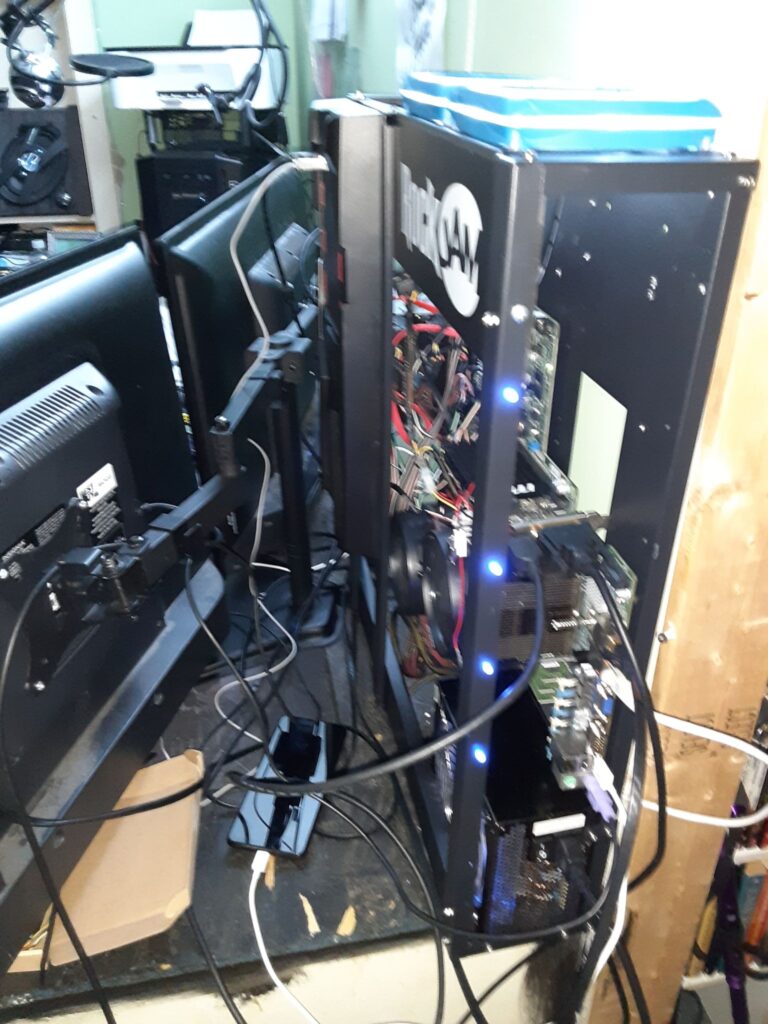
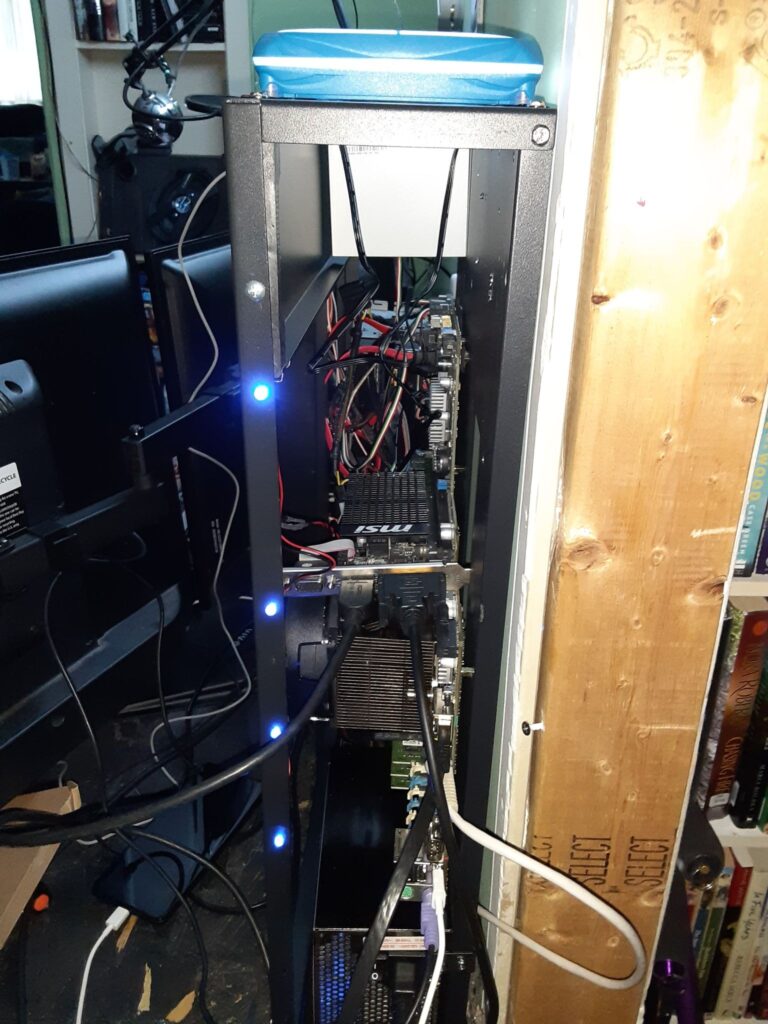
This time based on the Opteron processor, AMDs answer to the XEON processor. This was a little more difficult. All I could find was a board that had been stripped from a rack server. I had to do a lot of custom work to get it working and running reliably as a desktop computer. It is faster that the first XEON I built and I can add faster processors with more cores as well. 40 gb of memory, dual graphic cards. Very good turn out that I built into a custom open air case I fabricated to fit the oversized EATX type board. I am still working on my latest build, back to XEON, only the newer versions and another server board from yet another scrapped server. #servers #desktop #computer #computerbuild #amd #Opteron
So, first, the mother did come back for them, so don’t worry.
I don’t know what raccoons do, hunt for food? Gather? In any case the babies slipped out through a hole in the old shed they live in while mom was out doing whatever mother raccoons do. They found their way to an old side porch we only use for the cats and Amber (My Wife) and I put out some cat food to feed them thinking they would eat it.
They did, and, eventually mother raccoon came back. She was very pissed-off that we had kidnapped her raccoon babies. She wouldn’t come down from the shed, but prowled the roof edge, so I took each baby and lifted them up to her. Thank God she wasn’t rabid and bit me. I really wanted to keep one that came over, crawled into my lap and went to sleep. Amber said no and the mother raccoon would have probably killed me too.
The Criminal Intentions series are collected short crime fiction in each book that I have gathered together to present to the reader, Dell.
Short Stories in this collection:
HAPPY HOLIDAYS – THE TALE OF LIV – THE TRIP – HOOD RATS – THE PHONE CALL – CHEATING AND DEATH – SANTOS – HARROWS
An excerpt from the short story: The Story of Liv
For fifteen long minutes, Liv stood outside in the chilly, pre-dawn rain. Fifteen minutes felt like an eternity when the craving hit. Time stretched endlessly, with every clock and watch in the world ticking away the moments. Finally, she began testing the doors. The front and back doors were locked. She hadn’t considered the garage door, but eventually decided to try it. To her surprise, it was unlocked, although the lock was badly damaged, causing her to hesitate.
The Criminal Intentions books are collections of short stories, some short some nearly novel length that I have combined together in this collection for you to enjoy, Dell.
In this collection are the following short stories: PRIVATE INVESTIGATIONS – A GOOD PLAN – BLACKNESS OF THE SOUL – THE LAST TAXI RIDE – DELLO GREEN – THE ACCIDENT – THE MAN WHO NEARLY TOOK MY LIFE – THE STORY OF THE MEXICAN – WHEN THEY TRIED TO KILL ME
An excerpt from the short story The Accident:
I lay breathing heavy, trying to calm my racing heart. The dream had been so vivid, so real. I had held her and it had felt so good so real so right. She had turned to me and I had opened my eyes and really seen her. Seen what I was holding. A rotting corpse. She was coming closer, holding me, her hands suddenly clutching harder, trying to drag me down into the grave she stank of.
I was covered with sweat, but my heart slowed and I got myself up and made it to the shower.
The newfound resources provided a small measure of comfort, but the shadow of suspicion and mistrust lingered, a constant threat to their already precarious existence. They had survived the attack, but the war within Rapid City had only just begun, a war fought not with guns and blades, but with suspicion, betrayal, and the relentless erosion of trust. #Dystopian #Apocalyptic #Zombie #KU #Audio #Readers #Listeners #DellSweet
As they began to gather the supplies, a sound reached their ears – a muffled groan, coming from somewhere deep within the hospital. A sense of unease settled over them, their hard-won optimism replaced by a chilling apprehension. They cautiously made their way towards the source of the sound, weapons drawn, their steps measured and deliberate.
What they found was chilling. In a secluded corner of the hospital basement, they discovered a hidden chamber, concealed behind a false wall. Inside, they found Silas, surrounded by a cache of supplies far exceeding what they had just discovered in the storeroom. He was not alone. With him was a group of survivors, armed and hostile, their faces etched with a cruel determination.
Silas, his eyes devoid of any remorse, revealed his betrayal. He had never intended to cooperate. His participation in the community had been a carefully orchestrated charade, a means to an end. He had used Rapid City as a stepping stone, accumulating resources for his own survival. His actions shattered the remaining trust and exposed the treacherous underbelly of their fight for existence. He saw them, not as allies, but as obstacles, expendable pawns in his ruthless pursuit of self-preservation.
The revelation was a devastating blow. The weight of Silas’s deceit was crushing, threatening to extinguish the last embers of hope. Gary, stunned by the betrayal, felt the ground shift beneath his feet. He had trusted Silas, had seen him as an ally in their shared struggle. The realization that his trust had been so cruelly betrayed was a gut-wrenching blow. He looked at Robert and Anya, their faces a mask of shock and disbelief, mirroring his own profound disappointment.
Robert, however, showed no emotion. His expression remained impassive, his eyes cold and calculating. Years of survival in a brutal world had hardened him to betrayal, to the chilling realities of human nature. He assessed the situation, calculating their odds. The odds were stacked against them – outnumbered and caught off guard.
The fight was brutal and swift. Robert, with his years of experience, moved with lethal precision, his movements honed by years of facing down the worst humanity had to offer. Anya, despite her frail appearance, fought with a fierce determination, her movements fueled by a surge of adrenaline and a burning desire for revenge. Gary, though shocked by the betrayal, found within himself a reservoir of resilience, battling not just for his life, but for the memory of the life they had lost to Silas’s treachery.
The fight was messy and bloody, a brutal dance of survival in a world stripped bare of morality. The hospital’s dilapidated chambers echoed with the sounds of gunfire and the guttural cries of the combatants. The air grew thick with the smell of gunpowder and sweat.
In the end, against all odds, they managed to overpower Silas and his group. Robert, through a calculated combination of strategy and superior combat skill, managed to neutralize the threat, his movements swift and decisive. Silas lay defeated, his dreams of self-preservation shattered by the very people he had sought to exploit. The remaining survivors, broken and demoralized, surrendered without further resistance.
But the victory was pyrrhic. They had won the battle, but the war was far from over. The encounter had left them physically and emotionally drained. The revelation had shaken their faith in humanity, exposing the depths of human depravity in a world already ravaged by despair.
The discovery of the hidden cache of supplies was both a blessing and a curse. It provided a lifeline, a temporary reprieve from their immediate needs. But it also served as a stark reminder of the betrayals they had faced, the depth of corruption that festered within the hearts of those they had once considered allies. The weight of Silas’s betrayal hung heavy in the air, a constant reminder of the fragility of trust and the ever-present threat of those lurking in the shadows. The future remained uncertain, fraught with danger and fraught with the burden of moral dilemmas. Their journey continued, their steps haunted by the ghosts of the past and the uncertain shadows of the future. The road ahead remained treacherous, a constant struggle for survival against not only the undead, but against the insidious threat of humanity itself. The scars of betrayal ran deeper than the wounds inflicted in the battle, etching themselves onto their souls as indelible reminders of the horrors of their desperate existence. The struggle for survival continued, a relentless dance between hope and despair, a testament to the human spirit’s enduring resilience in the face of unimaginable adversity.
The weight of Silas’s betrayal hung heavy in the air, thick and suffocating like the dust that coated everything in the abandoned hospital. The victory, if it could even be called that, felt hollow. Anya, her face streaked with grime and blood, leaned against a crumbling wall, her breath coming in ragged gasps. The adrenaline had faded, leaving behind a bone-deep exhaustion and a chilling emptiness. Gary stared at Silas, his former friend, now a broken husk lying amidst the scattered debris of their brutal confrontation. The man’s eyes, once filled with a deceptive warmth, were now vacant, reflecting the harsh reality of his defeat. His ambition, his carefully constructed facade, had been shattered, leaving only the grim residue of his treachery.
Robert, however, showed no such signs of emotional turmoil. He moved with a grim efficiency, systematically searching the bodies of Silas’s group, collecting their weapons and any remaining supplies. His gaze was sharp, his movements precise, betraying no hint of the carnage he had just witnessed. He was a man sculpted by years of brutal survival, hardened to the point where even the most shocking acts of violence barely registered. His face, etched with the lines of hardship and countless close calls, remained impassive, his eyes reflecting only a cold calculation. He had seen too much to allow emotion to cloud his judgment…
In the heart of the vast and shimmering Pacific Ocean, three young ship boys, each no more than a few years past their childhood, found themselves cast away on a breathtakingly beautiful tropical island. This was no ordinary place; it was a lush paradise adorned with vibrant flora and fauna, where the warm sun kissed the golden sands and the gentle waves whispered secrets of the sea. Yet, beneath this idyllic exterior lay the harsh reality of survival in the 17th century, a time when the world was still largely unexplored and filled with both wonder and danger. #HistoricalFiction #SeaAdventure #DellSweet #KU #Kindle #Readers #BookLovers #Paperback